Key Points
- Front bandages are made of elastic or cohesive materials, providing a low-profile, secure fit for high-speed racing.
- Polo wraps consist of soft fleece, offering cushioned surface protection primarily used during training and schooling.
- Elastic front bandages resist moisture and stay tight at racing speeds, whereas fleece polos can absorb water and loosen.
- Improper application of either wrap can cause dangerous pressure points, circulation issues, or tripping hazards.
- First-time front bandages are not an automatic injury indicator, but rather a tool to prevent interference cuts.
- Handicappers should evaluate equipment changes alongside recent form, workout patterns, and established trainer habits.
What Are Front Bandages vs. Polo Wraps?
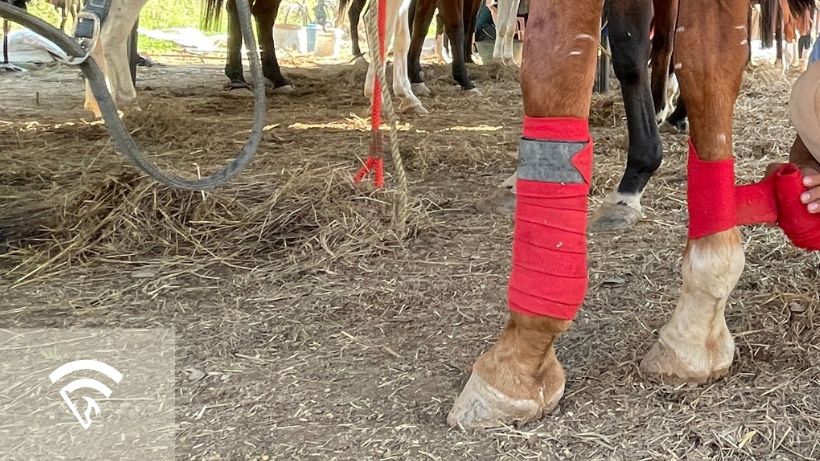
In racing, front bandages and polo wraps are both leg coverings used primarily on a horse’s front legs to protect skin, support soft tissue to a limited degree, and reduce interference nicks. They look similar from a distance but differ in material, purpose, and how they’re applied.
What Are Front Bandages?
Front bandages are race-day bandage jobs built from elastic or cohesive materials (often “vet wrap” over a thin underpad). They’re designed to lie smooth and tight enough to stay put at speed while offering abrasion protection and light support. You’ll often see a clean, uniform profile from just below the knee down to the fetlock, sometimes with a slight “chevron” finish at the bottom.
Key points
- Material: Elastic/cohesive wrap, sometimes with a thin cotton underlayer.
- Purpose: Skin protection and mild support during high-speed effort; helps prevent interference cuts.
- Application: Firm, even tension with smooth overlaps; done by experienced grooms to avoid pressure points.
- Rules: Generally permitted; some jurisdictions require equipment disclosure. Stewards may inspect for safety.
What Are Polo Wraps?
Polo wraps use long fleece strips wrapped around the cannon bone and fetlock. They’re common in training and schooling because fleece is forgiving and easy to rewrap, but it can absorb water, loosen, or shift if not secured perfectly. On race day, they’re less common than elastic bandages in many regions.
Key points
- Material: Fleece; soft and slightly bulky.
- Purpose: Surface protection in training; mild compression with more “cushion” feel than elastic.
- Application: Even, overlapping layers with consistent tension; requires skill to avoid bulk or gaps.
- Rules: Allowed where specified; practices vary by track. Disclosure and inspection may apply.
Practical Differences for Race Day
- Security at speed: Elastic front bandages tend to stay tighter and neater at racing tempo. Fleece polos risk loosening if applied poorly or if they get wet.
- Profile and weight: Front bandages create a lower-bulk profile; polos are thicker and can hold moisture.
- Use patterns: Many barns prefer elastic front bandages on race day and polo wraps in training. Habits vary by trainer and circuit.
- Risk management: Any wrap applied with uneven tension can create pressure points. Skill matters more than the material label.
Welfare & Safety Notes
- Wrapping should be done by experienced hands. Over-tight bands can impair circulation; loose wraps can slip and cause tripping.
- Clean, dry materials reduce skin irritation. Replace worn or stretched wraps.
- Some horses also wear bell boots or hind boots; those are separate items for overreach and strike protection.
Handicapping Considerations
- Front bandages appearing for the first time can be neutral or slightly positive for interference-prone horses, but they’re not a diagnosis of injury. Look for corroborating clues like steady workouts and a normal campaign pattern.
- A switch from polos in works to elastic on race day is routine and not inherently meaningful.
- Read equipment notes in context with recent form, spacing, and trainer patterns. Don’t over-upgrade or downgrade on wraps alone.
Quick Fan Tips
- In the post-parade, note whether wraps look even, smooth, and symmetrical.
- Wet, heavy conditions can make fleece polos more cumbersome; elastic tends to shed moisture better.
- Keep personal notes on barns: some always run in front bandages, making it a non-signal.
Ready to blend sharp equipment reads with data and replays? Sign up and add objective analysis to your race-day decisions.
Front Bandages vs. Polo Wraps FAQs
What is the difference between front bandages and polo wraps?
Front bandages are made of elastic or cohesive materials, providing a low-profile, secure fit that resists moisture and stays tight at racing speeds. Polo wraps are made of soft fleece, offering a thicker, cushioned layer primarily used during training and schooling. While front bandages are preferred for race day, polo wraps can absorb water and loosen if they get wet.
Why do horses wear polo wraps during exercise?
Horses wear polo wraps during training and schooling to provide surface protection and mild compression with a cushioned feel. Because fleece is forgiving and easy to rewrap, it is highly practical for daily exercise, though it is less common on race day due to its tendency to absorb water and loosen.
What purpose do front bandages serve for racehorses?
Front bandages protect the skin, support soft tissue to a limited degree, and help prevent interference cuts or nicks during high-speed efforts. Because they are made of elastic or cohesive materials, they lie smooth and tight, maintaining a secure, low-profile fit that resists moisture on race day.
Are polo wraps or front bandages better for leg support?
Both options offer only limited soft tissue support. Front bandages provide mild support and skin protection during high-speed racing, utilizing tight, elastic materials that stay secure. Polo wraps offer mild compression with a more cushioned feel, making them better suited for surface protection during training rather than high-speed support.
Can improper application of horse bandages or wraps cause injury?
Yes. Improperly applying either front bandages or polo wraps can cause dangerous pressure points, impair circulation, or create loose wraps that slip and become tripping hazards. To ensure safety and prevent injury, wraps should always be applied with even, consistent tension by experienced hands.