Genetic Strength Rating (GSR)
EquinEdge's Genetic Strength Rating (GSR) uses three generations of bloodline data to predict how well a horse will perform under specific conditions, making it an essential tool for evaluating first-time starters or horses with limited history. Gain unique insights into breeding potential and make more informed betting choices with GSR's easy-to-understand scores.
Sign Up to See GSR in ActionTry EquinEdge FREE for a limited time

What is Genetic Strength Rating?
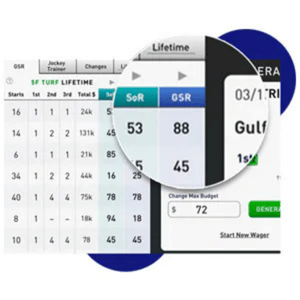
I used to spend a lot of time doing research on a horse's bloodlines, especially with first time starters or lightly raced horses. And a lot of times I had to go digging for the information I wanted. EquinEdge gives me a single number - GSR - or Genetic Strength Rating - to represent how well three generations of that horse's family tree has done on this same surface and distance of race. It is less useful in a field of horses with lots of past races, as the race data will be more valuable than the genetic data. But in close competition, the GSR can sometimes help differentiate similar horses.
Bloodline analysis is a key factor in understanding how a horse is likely to perform under specific conditions. Just as athletic ability can be influenced by genetics in humans, a horse's potential can be significantly impacted by the racing success of its ancestors. Certain lineages are known for excelling on particular surfaces, like dirt or turf, or at different race distances. By evaluating the performance of a horse's relatives, you can get a sense of how well-suited it might be for the current race conditions, especially if it hasn't run before or has limited history.
- Surface Preference: Some bloodlines produce horses that excel on turf while others are more dominant on dirt. Knowing a horse's genetic predisposition helps predict how it will handle a specific track.
- Distance Stamina: Certain breeding lines are known for speed over short distances, while others are more suited for endurance. Understanding these traits can be crucial when analyzing which horses are likely to perform best in sprints versus longer races.
Free Coaching Class
Scotty's Coaching Class helps you learn about our major features and how to apply them for handicapping.
Schedule NowFAQs
What does the Genetic Strength Rating (GSR) measure?
GSR evaluates how well a horse is likely to perform under specific race conditions by analyzing the race results of three generations of its bloodline.
When is the GSR most useful in handicapping?
GSR is especially helpful for evaluating first-time starters or horses with limited race history, since their genetic background may be more informative than past performance.
How does GSR help predict a horse’s surface and distance preferences?
By examining the track records of a horse’s ancestors on specific surfaces and at certain distances, GSR estimates whether the horse is likely to excel on dirt, turf, sprints, or endurance races.
Can GSR replace past performance data for handicapping?
No, GSR is best used when past race data is sparse; for horses with extensive race records, actual performance is generally more valuable than genetic information.
Why is bloodline analysis important in horse racing?
Bloodline analysis helps identify inherited traits like speed, stamina, and surface preference, which influence a horse’s potential to succeed under particular race conditions.
Is the GSR presented as a score or a detailed report?
EquinEdge simplifies bloodline analysis by providing a single easy-to-understand GSR score for each horse.
Does GSR differentiate similar horses in competitive fields?
Yes, when horses have comparable records or little history, GSR can sometimes highlight subtle genetic advantages between them.