Key points
- A flipping halter, also known as a flipping rig, is a specialized piece of starting gate equipment designed to prevent horses from rearing up, sitting back, or flipping over inside the stall.
- The halter features a unique nylon caveson design with a large bottom ring that secures the horse's head to the front of the starting gate.
- Assistant starters temporarily tether the halter to the gate structure, and the connection is released either automatically or manually the instant the gates open.
- Under standard stewards rules, if a horse is wearing a flipping halter and fails to break properly because it is sitting back on the rig, it is still declared an official starter, meaning all wagers stand and no refunds are issued.
- Understanding which horses wear this equipment is a vital handicapping factor, especially in short sprints and Quarter Horse racing where the start determines the outcome.
In the high-stakes environment of the starting gate, a clean break can make or break a horse's chances of winning. For some horses, the confined space of the gate stall causes extreme anxiety, leading to dangerous behaviors like rearing up, sitting back on their haunches, or attempting to flip over backward. To protect the horse, the jockey, and the starting gate crew, trainers often employ a specialized piece of horse equipment known as a flipping halter, or flipping rig.
For handicappers and bettors, this piece of equipment is far more than a safety device. It carries significant wagering implications that can directly impact your betting ticket. Understanding how a flipping halter works, why it is used, and how the rules of racing treat horses wearing them is essential for anyone looking to build a consistent edge at the track.
How a Flipping Halter Works in the Starting Gate
The primary function of a flipping halter is to keep a horse's head down and focused forward while inside the starting gate. When a horse attempts to rear up or flip backward, it must first raise its head. By restricting upward head movement, the flipping halter physically prevents the horse from initiating the motion required to flip over.
The process begins during gate loading. The horse wears the flipping halter, which is often placed underneath the bridle, as it approaches the starting gate. Once the horse enters its assigned stall, an assistant starter secures the halter to the front of the starting gate. This is typically done using a short strap or chain hooked to the large bottom ring of the halter and fastened to the gate structure.
This connection remains secure while the field is loaded and aligned. The moment the starter presses the button to open the gates, the tether must release instantly. In modern starting gates, this release is often mechanical, tied directly to the opening of the gate doors. In other instances, the assistant starter manually releases the strap as the doors spring open. This ensures the horse is completely free to run the moment the race begins.
Physical Design and Specifications
A flipping halter differs significantly from a conventional halter used for leading or tying a horse around the barn. It is engineered specifically to withstand the sudden, immense force of a thousand-pound thoroughbred or quarter horse pulling backward.
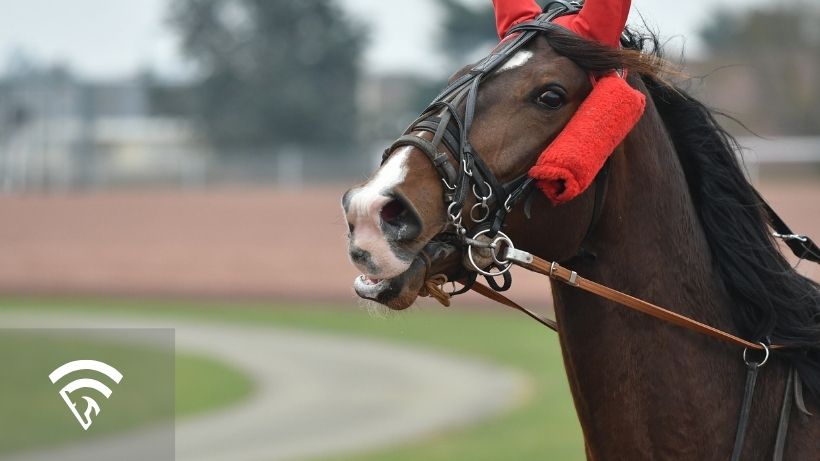
The design typically utilizes a nylon caveson style. A caveson is a noseband that wraps securely around the horse's muzzle, sitting higher up on the nasal bone than a standard halter noseband. This positioning provides maximum leverage and control over the horse's head without restricting its breathing.
Most professional-grade flipping rigs, such as a Jacks flipping halter or a TS flipping halter, are constructed from heavy-duty, 5/8-inch or 1-inch nylon webbing. The stitching is reinforced to prevent tearing under pressure. The defining physical feature of these equine halters is the large, heavy-duty bottom ring located under the jaw. This ring serves as the single attachment point for the gate tether, allowing the assistant starter to quickly clip and unclip the safety strap during the gate loading process.
Why Trainers Use Flipping Rigs
Trainers elect to use flipping rigs primarily as a safety measure and a gate training aid. The starting gate is a highly stressful environment. The combination of loud noises, metal doors slamming, and tight spaces can trigger a horse's claustrophobia or flight response.
Without a flipping halter, a horse that rears up in the gate risks serious injury. It can strike its head on the steel framework of the gate, trap its legs in the partitions, or fall backward onto its jockey. The gate crew members, who stand on narrow ledges inside the stalls to assist the horses, are also at extreme risk when a horse begins to thrash.
While the equipment is used in Thoroughbred racing, it is exceptionally common in Quarter Horse racing. In Quarter Horse sprints, which range from 220 to 870 yards, the start is the most critical part of the race. A fraction of a second lost at the break cannot be recovered. Because Quarter Horses are bred for explosive short-distance speed, they are often highly keyed up and prone to gate antics. Trainers use flipping rigs to keep these horses calm, straight, and focused on the track ahead, ensuring they are in the optimal position to break cleanly.
Wagering Implications for Handicappers
For bettors, the presence of a flipping halter introduces a specific, high-risk variable that must be factored into every handicapping decision. The most critical aspect of this equipment lies in the regulatory rules governing the start of the race.
According to standard stewards rules across North American racing jurisdictions, if a horse is wearing a flipping halter and fails to break with the field because it was sitting back on the rig, the horse is almost always declared an official starter.
This means that if the gate doors open and the horse is tangled, hesitating, or pinned back by its own resistance against the halter, your wager will not be refunded. The stewards view the situation as a self-inflicted gate mistake by the horse rather than a mechanical failure of the starting gate itself. Because the gate doors opened and the release mechanism functioned, the horse had the opportunity to start, and all bets on that horse stand.
This rule makes identifying horses in flipping rigs a priority for handicappers. When a horse is wearing a flipping halter, it tells you two things:
- The horse has a documented history of dangerous gate behavior, rearing, or sitting back.
- There is an elevated risk of a poor start if the horse decides to fight the halter at the exact moment the gates open.
If you are backing a heavy favorite who is wearing a flipping halter for the first time, or who has a history of slow breaks while wearing one, the risk profile of your bet increases dramatically. Conversely, if a horse has shown improved gate behavior during morning workouts and is breaking cleanly despite the halter, it may offer value if the general public overreacts to the equipment listing.
Frequently Asked Questions
Does a horse wearing a flipping halter get refunded if they miss the break?
No. Under standard racing rules, if the starting gate doors open and the horse fails to break because it was leaning back or fighting the flipping halter, the horse is ruled an official starter. Your bet will not be refunded, and the horse will be loaded into the official results as having run, even if it walked out of the gate seconds after the field.
How can you tell if a horse is wearing a flipping halter?
Equipment changes, including the addition or removal of a flipping halter, must be declared to the track stewards and are published in the official track program, daily racing forms, and handicapping databases. On the physical program, it is often designated by the abbreviation "FH" or noted in the equipment section. You can also spot the halter during the post parade or gate loading, where you will see a heavy nylon noseband underneath the bridle and a large ring under the horse's chin.
Is a flipping halter the same as a regular halter?
No. A regular halter is used for leading, grooming, and securing a horse in a stall or trailer. A flipping halter is a specialized, reinforced nylon caveson designed specifically for use inside the starting gate. It features heavy-duty hardware, reinforced stitching, and a large bottom ring designed to attach directly to the starting gate structure to prevent rearing.
Why are flipping halters so common in Quarter Horse racing?
Quarter Horse racing is defined by explosive, short-distance sprints where the start is the most crucial part of the race. Because these horses are bred for immediate speed, they are often highly excitable in the starting gate. Trainers use flipping halters to keep them straight, calm, and safe, preventing them from ruining their race before the gates open.
Making Data-Driven Decisions
In horse racing, information is the ultimate equalizer. Equipment details like the use of a flipping halter are often overlooked by casual bettors, yet they carry massive weight when determining the true risk of a wager. A horse with elite speed figures might look like a standout on paper, but if that horse has a history of gate trouble and is wearing a flipping rig, the potential for a compromised start must be factored into your handicapping.
By combining equipment data with advanced metrics, you can identify which horses possess the consistency to deliver on their speed figures and which ones carry hidden risks. Successful handicapping relies on looking at the complete picture, from physical equipment in the starting gate to real-time track conditions, to make highly informed, confident selections on every race.