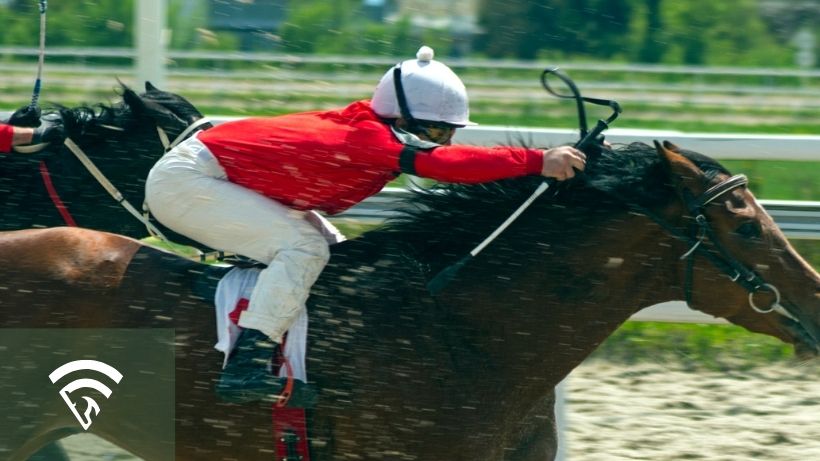
Key points
- Pricking the ears means a racehorse points both ears forward, showing alertness, curiosity, or focused energy.
- In the paddock, forward ears point to interest and confidence rather than stress or fatigue.
- During a race, a horse that pricks its ears often moves easily with energy left in reserve.
- Pinned ears point straight back against the neck and show anger, discomfort, or maximum effort.
- Pricked ears can sometimes signal that a leading horse is waiting on competition or losing focus.
- Handicappers combine visual cues with raw speed and pace metrics to make smarter betting decisions.
Quick Definition
When a racehorse pricks its ears, it points both ears forward toward something ahead. This visual cue shows alertness, interest, and positive focus. Horses prick their ears when they spot an object, focus on the track ahead, or run comfortably within themselves during a race.
What Equine Ear Positions Signal to Handicappers
Racehorses use their ears as a primary tool for visual communication. Because horse ears rotate nearly 180 degrees, their position reveals a horse's mental state before and during a race. Handicappers who study these physical signals gain useful context that raw speed figures alone cannot supply.
An attentive horse points its ears forward to process sights and sounds ahead. A relaxed horse lets its ears drift slightly out to the sides. A stressed, angry, or overextended horse pins its ears flat back against its neck. Observing these shifts helps bettors evaluate how comfortably a runner handles the environment.
Evaluating physical appearance in the paddock gives handicappers a clear baseline for each entry before horses hit the track.
What Pricked Ears Signal During Different Phases of a Race
A horse showing forward ear posture means different things depending on when and where it happens on race day.
Paddock Observation
During pre-race walking rings and saddling, pricked ears signal healthy curiosity. A horse that looks around with forward-facing ears is calm and engaged with its surroundings. It is aware of the crowd and paddock activity without panicking.
Bettors who build a thorough paddock analysis strategy look for this balanced state. If a horse pairs forward ears with a relaxed stride and dry skin, it is mentally ready to compete. If a horse swivels its ears back and forth constantly, it may feel anxious or overwhelmed by noise.
Mid-Race and The Stretch Run
During the run around the turn or down the stretch, pricked ears give a strong hint about energy reserves. When a horse moves into the lead and pricks its ears, it is often running within itself. The jockey has not asked for maximum effort yet, and the horse feels comfortable at its current speed.
This visual cue often precedes a strong finish. A horse running with forward ears feels confident in front and has not exhausted its breathing or stamina.
Post-Race and Crossing the Finish Line
When a horse crosses the wire with its ears pricked forward, it usually won with room to spare. The horse did not have to push past its physical limit to hold off the field.
In close battles that end in a tight head vs. nose vs. neck finish, ear position can show which horse stayed composed under pressure. A winner with forward ears handled the stretch duel with calm composure.
Pricked Ears vs. Pinned Ears: Key Differences
Understanding the difference between forward ears and pinned ears helps bettors separate true drive from distress.
| Ear Position | Physical Sign | Mental State | Handicapping Meaning |
|---|---|---|---|
| Pricked Ears | Pointed straight forward | Alert, confident, curious | Running comfortably with energy in reserve |
| Relaxed Ears | Slightly outward, loose movement | Calm, resting, indifferent | Low stress, typical pre-race posture |
| Pinned Ears | Pressed flat back against the neck | Angry, strained, aggressive | Maximum physical exertion or discomfort |
Pinned ears show that a horse is digging deep or reacting to pain, pressure, or a nearby rival. While a horse with pinned ears can certainly win a hard stretch duel, it is expending all available effort. A horse with pricked ears is operating with lower stress and greater ease.
Genuine Focus vs. Idling and Distraction
While pricked ears usually signal positive energy, they can sometimes warn handicappers of a problem called idling.
When a young or inexperienced horse takes the lead, it may prick its ears because it feels lonely or bored in front. Instead of maintaining its speed, the horse slows down to look around at the crowd, the tractor tire marks, or the infield big screen. The forward ears show distraction rather than purposeful drive.
Jockeys must use subtle hand or whip cues to force an idling horse back into focus. If a horse pricks its ears and visibly shortens its stride in the stretch, a closing rival can quickly catch it. Recognizing mental toughness in racehorses helps you separate true competitive grit from horses that lose concentration when they reach the lead.
How to Factor Equine Body Language Into Your Handicapping
Visual body language gives context, but it works best when combined with objective performance data. Use this practical framework on race day:
- Start with data metrics: Examine past performance figures, class ratings, and speed projections using EquinEdge handicapping tools.
- Watch the live paddock stream: Confirm that your top picks show calm alertness with forward or loose ear movement.
- Check the post parade: Ensure the horse travels smoothly behind the pony rider without washing out or pinning its ears.
- Observe stretch runs: Note horses from previous races that pricked their ears while finishing. Those runners often step up in class successfully in their next start.
Integrating visual observation with real-time race metrics gives you a complete view of both the horse's physical capability and its mental readiness.
Frequently Asked Questions
Does a racehorse always run faster when its ears are pricked?
No. Pricked ears show mental state and comfort level, not absolute speed. A horse may prick its ears while moving at a moderate pace simply because it feels comfortable and relaxed.
What does it mean if a horse swivels one ear back and one ear forward?
A horse with swiveling ears is listening to multiple stimuli. It keeps one ear forward to monitor the path ahead and one ear back to listen to its jockey's voice or behind-the-field rivals.
Can a horse win with pinned ears?
Yes. Pinned ears often mean a horse is fighting hard in a competitive stretch battle. It signals intense exertion and determination, though it also shows the horse is working at its absolute limit.