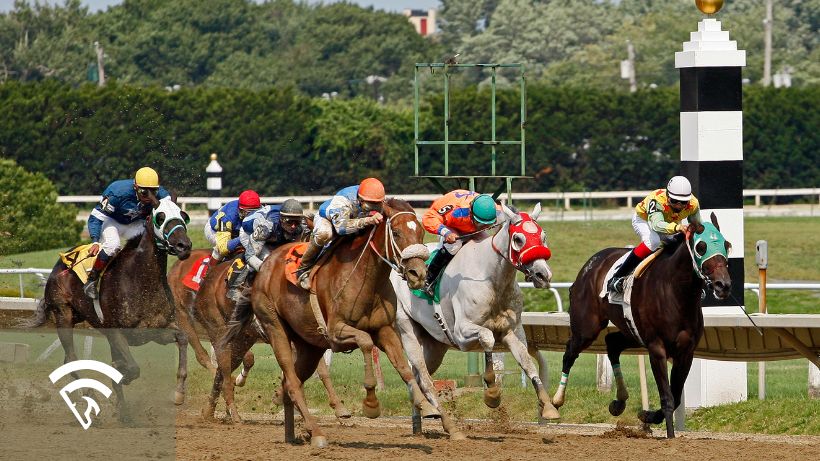
What Is True Odds in Horse Racing?
True odds in horse racing represent the real probability of a horse winning a race, expressed in betting-odds form without bookmaker margins added. They differ from the odds shown on the tote board or by bookmakers, which include profit margins and market bias. Calculating true odds helps identify value bets where the chance of winning is higher than the odds imply, forming the foundation of profitable betting strategies.
What Are True Odds in Horse Racing?
True odds are the fair odds that would exist in a perfectly efficient market with no bookmaker’s margin. They reflect the estimated real win probability of a horse based on performance, form, pace, class, and other factors. Posted odds in horse racing often differ from true odds because they are influenced by public betting behavior and margins.
Understanding this gap reveals two critical questions:
- what are the chances a horse actually wins
- how those chances compare with the price being offered
True odds vs. bookmaker odds
Bookmaker odds are market prices shaped by:
- public sentiment
- liability management
- overround (built-in margin)
True odds aim to remove these distortions and isolate fair value. When bookmaker odds are higher than true odds, value may exist.
Bookmaker’s margin (overround) explained
Overround is the total implied probability of all runners based on market odds. In a fair market it would equal 100 percent. In reality it commonly exceeds this number, which represents the bookmaker’s built-in edge. For example, an overround of 115 percent reflects a 15 percent margin spread over the field.
Implied probability: definition and use
Implied probability is the probability embedded within betting odds. Converting odds to implied probability allows comparison with personal or model-based estimates. This comparison is the basis of value betting.
Why Understanding True Odds Matters
True odds are fundamental to disciplined wagering. They help shift focus from picking winners to finding good bets.
The power of value betting
Value betting involves placing wagers where true odds suggest a higher win probability than market odds imply. Profitable bettors think in terms of long-run expectation rather than single outcomes. A horse losing today does not invalidate value if the price exceeded the true risk.
Risk management and smart betting
True-odds awareness supports:
- realistic expectations
- measured bet sizing
- reduced emotional decision-making
Concepts like expected value and the Kelly Criterion rely on accurate probability estimation rather than guesswork.
Common misconceptions about true odds
Frequent misunderstandings include:
- assuming odds equal true probability
- believing longshots automatically offer value
- ignoring bookmaker margins
- confusing popularity with statistical likelihood
True odds are not predictions of what will happen in a single race. They are estimates of how often a result would occur across many similar races.
How to Calculate True Odds in Horse Racing
Calculating true odds involves estimating win probability and converting it into fair odds.
Step 1: estimating win probability
Win probability can be estimated through:
- past performance ratings
- speed figures and pace analysis
- class comparisons
- AI model outputs such as EE Win Percentage
- expert handicapping judgment
This probability represents the percentage of simulated races that horse would win if the race were run repeatedly.
Step 2: converting probability to fair odds
Once probability (p) is estimated:
- Decimal fair odds = 1 / p
- Fractional fair odds = (1 − p) / p
Example:
- probability = 0.25
- decimal fair odds = 4.0
- fractional fair odds = 3/1
These are the true odds before margins.
Adjusting for vigorish (bookmaker’s margin)
Vigorish, or “vig,” is the margin included in posted prices. To remove it:
- Convert each horse’s odds to implied probability
- Sum the implied probabilities
- Divide each implied probability by the total
- Reconvert to odds
This normalization produces truer estimates of win chance by removing overround.
Power method and advanced techniques
More advanced bettors use power methods that:
- weight factors nonlinearly
- account for field size
- incorporate finishing-position distributions
These techniques are common in software-driven environments and professional handicapping models.
Worked example: from odds to probability
A horse priced at 5/1 has implied probability:
Probability = 1 / (5 + 1) = 0.1667 or 16.67 percent
If personal or model estimates indicate a 25 percent chance of winning, true odds (fair odds) would be 3/1. This defines a significant value discrepancy.
Factors Affecting Win Probability and True Odds
True odds are driven by anything that influences race outcomes.
Horse form and performance data
Critical indicators include:
- last race figures
- consistency patterns
- layoffs and comebacks
- trainer form cycles
True odds adjust when the form cycle changes.
Track conditions and pace metrics
Track condition impacts performance dramatically:
- fast vs sloppy dirt
- firm vs soft turf
Pace metrics identify whether a race favors speed or closers. Pace collapses and lone-speed scenarios both reshape win probability.
Genetic strength and competition
Pedigree influences:
- surface preference
- distance capability
- adaptability to conditions
Competition quality also matters. A horse dropping from graded stakes to allowance company experiences a true-odds boost regardless of posted price.
Using AI and modern tools
AI-powered systems such as EquinEdge provide:
These tools synthesize thousands of historical examples to estimate win probability at scale. They reduce noise and stabilize odds projections more than manual handicapping alone.
Using Software and Tools to Calculate True Odds
Technology has transformed true-odds calculation from a manual task to data-assisted analysis.
Online true odds calculators
Calculators help convert odds formats and remove bookmaker margin, producing fair odds values quickly.
AI platforms: EquinEdge and unique metrics
EquinEdge delivers probabilities directly through EE Win Percentage and other metrics. These outputs represent model-based estimates of true win likelihood, which can be compared against market odds to identify value.
Practical Strategies for Profitable Horse Racing Bets
True odds become most powerful when applied systematically.
Spotting value bets in the market
Key signals of value include:
- higher personal or model probability than implied by odds
- overlays on underrated trainers or track angles
- mispriced pace scenarios
Tracking overlays across many races produces long-term expectation.
Avoiding common betting traps
Typical pitfalls include:
- chasing short-priced favorites blindly
- betting longshots for thrill rather than value
- ignoring sample size
- reacting emotionally to recent wins or losses
True odds act as an anchor against intuition-based errors.
Matched betting strategies
True odds also support matched betting and hedging strategies by revealing:
- optimal back and lay combinations
- where margins can be extracted from price differences
The 80/20 rule in horse racing
The 80/20 rule suggests that a small percentage of bets generate most profits. Concentrating on selective high-value wagers rather than constant action aligns with true-odds principles.
Frequently Asked Questions (FAQs)
What is an example of a true odds?
If a horse has a 40 percent chance of winning based on performance and analysis, the true odds are 1.5 in decimal or 3/2 in fractional format. These odds exclude bookmaker margin.
What does +200 in odds mean?
+200 in American odds format means a 100 unit stake returns 200 units of profit. The implied probability is about 33.3 percent.
What is the smartest bet in horse racing?
The smartest bet is one with positive expected value, where true odds imply a higher chance of winning than the posted odds reflect. This can occur on favorites or outsiders depending on mispricing.
Conclusion: Making Smarter Bets with True Odds
True odds in horse racing reveal what prices should be if markets contained no margin or bias. Understanding how to calculate them, compare them with implied probabilities, and integrate modern tools creates a framework for disciplined, value-focused betting. AI-driven platforms such as EquinEdge simplify probability estimation and highlight situations where market odds diverge from true chances. Combining these tools with sound bankroll management and selective wagering builds a more informed and sustainable betting strategy.