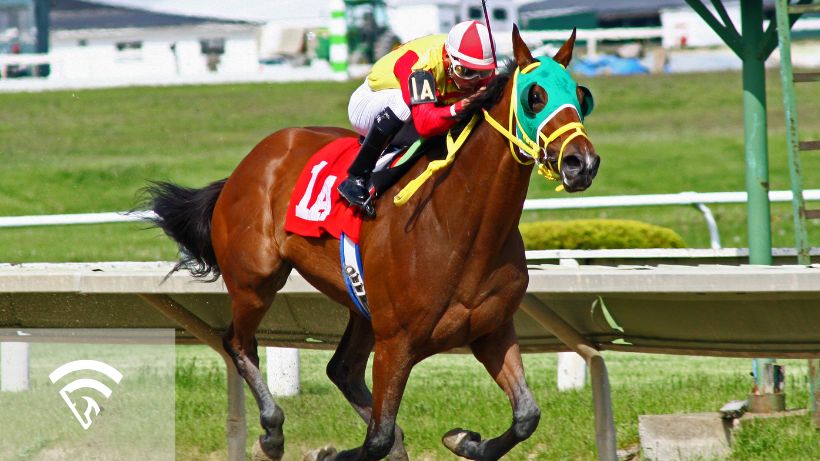
What Is Variance in Horse Racing Betting?
Variance in horse racing betting refers to the natural ups and downs in results caused by randomness, changing race conditions, and probability. Even good bets can lose in the short term, while poor bets sometimes win. Variance explains why winning and losing streaks occur and why long-term performance often looks different from short-term results. Understanding variance helps bettors interpret streaks, protect bankrolls, and make decisions based on value rather than emotion.
Introduction: Why Understanding Variance Matters in Horse Racing Betting
Horse racing offers drama, speed, and sudden reversals of fortune. It also delivers one of the highest levels of unpredictability in sports betting. That unpredictability—known as variance—shapes every winning streak, losing streak, and surprising longshot that crosses the wire first.
Understanding what variance is, how it works, and how it affects bankrolls turns confusion into clarity. Instead of seeing losses as personal failure or wins as proof of invincibility, variance frames results as part of a statistical reality. Clarity around variance supports smarter staking, calmer decision-making, and realistic expectations in both hot and cold runs.
This guide explains what variance means in betting, why it is especially intense in horse racing, how it affects short- and long-term outcomes, and practical ways to manage it psychologically and financially. It also highlights how modern AI tools such as EquinEdge help identify value and navigate variance with data-driven insight.
What Is Variance? Definition and Real-World Meaning
In simple terms, variance is a measure of how much results deviate from expectations.
In statistics, variance measures the average squared distance of outcomes from the mean. In betting, that abstract math translates into something very tangible: fluctuating bankrolls, streaks, and unexpected outcomes.
- High variance = large swings (big wins and big losses)
- Low variance = steadier, smaller fluctuations
In horse racing, high odds, large fields, and unpredictable race dynamics produce naturally high variance. A bettor who consistently makes positive expected value decisions may still encounter long losing streaks before results “catch up” to the math.
Variance vs. Standard Deviation: What’s the Difference?
Variance and standard deviation are closely related.
- Variance measures the spread of results from the expected average
- Standard deviation is simply the square root of variance
Standard deviation is often easier to visualize because it is in the same units as the original data (e.g., profit or return), while variance is in squared units. In betting discussions, both terms describe volatility, but standard deviation tends to align more directly with bankroll swings.
Variance vs. Luck: Clearing Up Misconceptions
Variance is not the same as luck.
- Variance is a predictable property of probability systems
- Luck is how variance feels in real-time
Luck is the story; variance is the structure behind the story.
A winning streak does not necessarily indicate superior skill, just as a losing streak does not automatically prove poor strategy. Over time, variance converges toward mathematical expectation—but the journey can be bumpy.
Examples of Variance in Sports Betting
Variance appears across all sports:
- A basketball favorite missing last-second free throws
- An underdog football team scoring on a fluke turnover
- A golfer winning due to weather shifts
Horse racing amplifies all of this because a single small event—a bad break, traffic trouble, pace collapse—can flip the entire result. That is variance in action.
Variance in Horse Racing: Why It’s Especially High
Horse racing delivers one of the highest-variance environments in sports betting. Several characteristics explain why.
Variance in Horse Racing Outcomes
Unlike head-to-head sports, horse racing often features:
- 8, 10, 12, or more entrants
- multiple pace scenarios
- complex tactical decisions by jockeys
- variable track conditions
- unforeseen traffic and interference
With so many variables, even elite horses lose often. The best runners in the world do not win every race; probability and variance ensure that surprising outcomes are inevitable.
Impact of Field Size and Longshot Wins
Field size dramatically influences variance:
- Small fields → fewer unknowns → lower variance
- Large fields → more chaos → higher variance
Longshots increase variance by paying massive returns infrequently, producing large swings in ROI. A long dry spell may precede a single large win that defines a month of results.
Short-Term vs Long-Term Impact of Variance
Variance behaves differently depending on timeframe.
Short-Term Impact
In the short run, results:
- swing wildly
- generate streaks
- appear unfair or emotional
Bankroll graphs over short horizons often resemble jagged mountains. Short-term variance can feel like volatility without meaning, even when wagers have positive expected value.
Long-Term Impact
Over longer timelines:
- results drift toward expected value
- true skill level becomes more visible
- randomness has less influence on totals
This is the principle of regression to the mean—outliers soften as sample size increases.
Winning and Losing Streaks: What Do They Mean?
Streaks do not automatically signal change in ability or approach. In high-variance environments:
- Losing streaks are inevitable
- Winning streaks can occur without underlying advantage
The key interpretation question is not “Why did this streak happen?” but rather “Were the bets positive expected value?”
Regression to the Mean: Why Streaks Even Out
Regression to the mean explains why streaks rarely last forever.
Extreme results eventually move closer to the long-term average. A hot streak cools. A cold streak thaws. The process does not “owe” anything; it simply reflects the law of large numbers.
Variance, Expected Value (EV), and Bankroll Management
Variance cannot be eliminated, but it can be understood and managed. The connection between variance, expected value (EV), and bankroll size determines whether a betting strategy survives.
Expected Value (EV) in Betting
Expected value answers one question:
If the same bet were placed thousands of times, would the result be profit or loss on average?
High-EV betting strategies can still experience brutal short-term variance. Short-term disappointment does not invalidate positive EV; it simply reflects randomness in small samples.
How Variance Impacts Bankroll Growth
High variance can:
- accelerate bankroll growth during hot periods
- cause deep drawdowns during cold periods
- require larger bankrolls to withstand swings
Underestimating variance leads to ruin far more often than misjudging EV.
Bankroll Management Strategies for High Variance
Common approaches include:
- fixed-percentage staking
- Kelly Criterion variants
- flat betting
- loss limits and stop-loss rules
- diversification across bet types and tracks
Sound bankroll management accepts variance as inevitable and plans for losing streaks before they happen.
Emotional Control: Staying Cool Through Variance
Emotional control plays as great a role as mathematics. Variance can trigger:
- panic during downturns
- overconfidence during hot runs
- chasing behavior
- stake inflation or tilt
Recognizing variance as normal fluctuation promotes discipline and prevents impulsive decisions.
How EquinEdge’s AI Tools Help Manage Variance and Find Value
AI tools do not remove variance, but they help identify long-term value and improve decision quality.
EquinEdge uses large-scale racing data and machine learning to evaluate horses more objectively than intuition alone. Core metrics include:
- EE Win Percentage – model-derived probability of winning
- Pace Metric – projected early and late speed
- Genetic Strength Rating (GSR) – pedigree suitability analysis
- Strength of Race (SoR) – quality of competition faced
Using AI Metrics to Reduce the Impact of Variance
AI-driven metrics help:
- avoid weak favorites
- highlight overlooked contenders
- quantify uncertainty
- maintain consistency during streaks
- select race types aligned with risk tolerance
The goal is not to chase certainty but to stack small, repeatable edges that perform across large samples.
Real-Life Success Stories: Managing Variance with EquinEdge
Data-driven players using EquinEdge often report:
- fewer emotionally motivated bets
- more consistent selection processes
- better anticipation of chaos in big fields
- trust in long-term outcomes despite swings
AI reframes variance from mystery into measurable risk.
Variance-Reducing Techniques: What Works and What Doesn’t
Variance cannot be “defeated,” but it can be managed.
Effective approaches include:
- emphasizing value over favorites alone
- focusing on appropriate field sizes
- diversifying race types and tracks
- using statistical models
- aligning bet size with bankroll reality
- embracing long-term measurement
Ineffective myths include:
- believing variance disappears with “luck”
- martingale doubling strategies
- assuming favorites automatically reduce variance profitably
- chasing losses to “get even”
Variance vs. Skill: Finding an Edge
Skill expresses itself through long-term expected value. Variance determines how bumpy the road becomes while that skill plays out. Sustainable betting comes from:
- edge creation
- variance awareness
- bankroll preservation
- psychological resilience
The Role of Luck and Randomness in Betting
Luck and variance always play a role. Even the best handicapping cannot foresee:
- stumbles at the break
- poor trips
- changing pace scenario
- jockey decisions
- weather shifts
The goal is not eliminating randomness; it is thriving despite it.
Common Myths and FAQs About Variance
What is the variance in horse racing?
Variance in horse racing refers to the natural fluctuation in betting results due to randomness, changing race conditions, and probability. It explains why strong horses sometimes lose and longshots occasionally win, as well as why bankrolls rise and fall in uneven streaks.
What is variance betting?
Variance betting describes wagering strategies that account for or intentionally embrace high volatility. Some strategies target longshots with high variance and high potential payouts, while others aim to lower variance through conservative selections and staking control.
What is the 80/20 rule in horse racing?
The 80/20 rule in horse racing is a general observation suggesting that a small percentage of bets or horses produce the majority of returns. It illustrates the uneven distribution of outcomes and highlights the importance of selectivity and value-driven decisions.
What is the variance of a gamble?
The variance of a gamble is a statistical measure describing how widely actual results deviate from expected outcomes. High-variance gambles produce large swings in profit and loss, while low-variance gambles produce steadier but often smaller changes.
Conclusion: Embracing Variance for Long-Term Betting Success
Variance is not an enemy to defeat but a reality to understand. It explains winning streaks, losing streaks, unexpected results, and the emotional rollercoaster of horse racing betting. Awareness of variance supports smarter bankroll management, realistic expectations, and calmer reactions to short-term outcomes.
When combined with positive expected value strategies and modern AI tools such as EquinEdge, variance becomes manageable. Long-term success comes from accepting short-term swings, maintaining discipline, and relying on data rather than emotion.
Understanding variance transforms chaos into context—and turns horse racing betting from frustration into a long-term strategic endeavor.