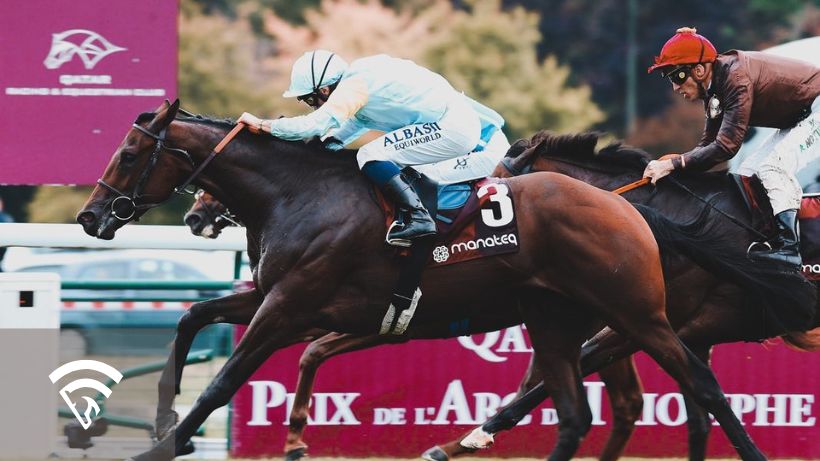
Key Points
- Prix de l'Arc de Triomphe ("the Arc"): annual Group 1 turf flat race at Longchamp, Paris; 2,400 meters, horses aged 3+, first Sunday in October.
- Considered the most important turf race globally; winning boosts stud value, is a season-defining target, and attracts elite runners from Europe, Japan, and beyond.
- First run in 1920 after World War I, named for France’s Arc de Triomphe; temporarily staged at Chantilly in 2016-2017 during Longchamp renovations.
- Winning demands speed, stamina, tactical positioning, and adaptability to soft/heavy autumn ground; three-year-olds receive weight allowance versus older horses, complicating handicapping.
- Longchamp’s wide, sweeping course adds bends, elevation changes, and an uphill finish; moving too early or getting trapped inside can ruin a winning chance.
- Sea Bird, Alleged, Dancing Brave, Zarkava, and Enable are notable winners; to track campaigns/results, use EquinEdge Results; Enable won in 2017-2018, missed third.
What is the Prix de l'Arc de Triomphe?
The Prix de l'Arc de Triomphe, often simply called "the Arc," is one of the most prestigious horse races in the world. Held annually at Longchamp Racecourse in Paris, France, it is a Group 1 flat race run over a distance of 2,400 meters (about 1½ miles) on turf.
Open to horses aged three and older, the Arc typically takes place on the first Sunday in October and is considered the pinnacle of European turf racing. It regularly attracts the best horses from Europe, Japan, and beyond, and winning it is seen as a major achievement for any racehorse, trainer, jockey, or owner.
Many consider it the most important turf race globally and one of the toughest tests for a thoroughbred.
History and Legacy
The Prix de l'Arc de Triomphe was first run in 1920, shortly after World War I, and was named to honor the soldiers who fought for France, symbolized by the Arc de Triomphe monument in Paris.
Since its creation, the Arc has grown into a true international event, with past winners including some of the greatest horses in racing history such as Sea Bird, Alleged, Dancing Brave, Zarkava, and Enable.
The race was temporarily relocated to Chantilly Racecourse during Longchamp’s major renovations from 2016 to 2017 but has since returned to its historic home.
Why the Arc Matters
The Arc is not just prestigious because of tradition—it’s also considered one of the most competitive and challenging races to win. Horses must combine speed, stamina, tactical positioning, and adaptability to varying ground conditions, especially because autumn weather can make the Longchamp turf soft or heavy.
It’s also a race where three-year-olds and older horses meet, adding another layer of complexity. Younger horses often receive a weight allowance, which helps level the playing field but also creates difficult handicapping questions.
Winning the Arc can greatly enhance a horse’s value at stud, and for many European owners and trainers, it is the ultimate target of the season.
Race Conditions and Course
Longchamp is a wide, sweeping course with an uphill finish. Horses must navigate several bends and changes in elevation before reaching the long homestretch, where many races are won or lost.
Tactical speed, the ability to handle varying ground, and a strong late burst are crucial traits for success at Longchamp. Jockey timing is especially critical, as making a move too early or getting trapped inside can cost even the best horses their chance at glory.
Notable Winners
Some of the most famous Arc winners include:
- Sea Bird (1965)
- Alleged (1977 and 1978)
- Dancing Brave (1986)
- Zarkava (2008)
- Enable (2017 and 2018)
Enable’s back-to-back victories and her near miss for a third win helped elevate her into legendary status, and her performances showed just how difficult it is to win this race more than once.
Final Thoughts
The Prix de l'Arc de Triomphe is a true championship race that demands brilliance, toughness, and precision. With its rich history, global appeal, and demanding course, the Arc remains one of the most anticipated and celebrated events in the racing world.
If you want to stay up to date on major racing results and championship campaigns, visit the EquinEdge Results page, where you can track outcomes from top tracks like Belmont Park, Santa Anita, and Colonial Downs.
Looking to follow top horses on the world stage?
Sign up for an EquinEdge account and gain access to predictive analytics, pace projections, and sharper insights for major racing events worldwide.
FAQs
When and where is the Prix de l'Arc de Triomphe usually run?
It is typically held on the first Sunday in October at Longchamp Racecourse in Paris, France. The race is run over 2,400 meters on turf.Which horses can compete in the Arc?
The race is open to horses aged three and older. That mix of younger and older runners is part of what makes the event so challenging.Why is the Arc considered one of the hardest races to win?
Horses need speed, stamina, tactical positioning, and the ability to handle changing ground conditions. Autumn weather can make the turf soft or heavy, which adds another layer of difficulty.What makes Longchamp such a demanding course?
Longchamp has a wide, sweeping layout with several bends, changes in elevation, and an uphill finish. Races can be decided by how well a horse handles the course and how well the jockey times the move.Why do three-year-olds get a weight allowance in the Arc?
The allowance is meant to help balance the competition between younger horses and older runners. It can make the race more competitive, but it also creates tougher handicapping decisions.Was the Arc always run at Longchamp?
No. It was temporarily moved to Chantilly Racecourse in 2016 and 2017 while Longchamp underwent major renovations.Have any horses won the Arc more than once?
Yes. Alleged won in 1977 and 1978, and Enable won in 2017 and 2018; her near miss in trying for a third win showed how difficult repeat victories are.Why does winning the Arc matter so much beyond the trophy?
A win can significantly boost a horse’s value at stud. For many European owners and trainers, it is also the ultimate goal of the racing season.