Key points
- Turn time is the sectional elapsed time a horse takes to run between the first call and the second call of a race.
- Handicappers call turn time the hidden fraction because past performance charts hide it inside cumulative split times.
- Turn time measures how well a horse maintains speed while bending around the turn and absorbing early pressure.
- Pace pioneer Tom Brohamer popularized turn time as the critical second fraction in Sartin methodology.
- Comparing turn times across sprint and route races reveals energy distribution that standard final times miss.
- Automated handicapping tools calculate fractional split times instantly to highlight hidden contenders.
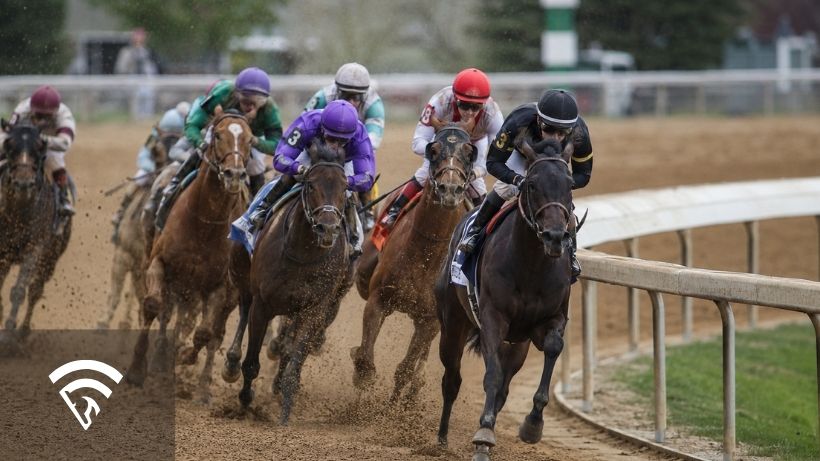
Turn time in horse racing is the sectional split time a horse covers between the first call point and the second call point of a race. In standard past performance charts, tracks list cumulative times at each call point rather than individual fractional segments. Handicappers calculate turn time by subtracting the first call time from the second call time. This metric measures the middle portion of a race where horses navigate the turn, transition from early speed, and position themselves for the stretch run.
Why turn time is called the hidden fraction
Official race charts print cumulative clockings. When you look at a past performance line, you see the time a leader took to reach the first call, the second call, and the finish line. You do not see the exact time the horse took to complete the middle segment alone.
Handicappers refer to turn time as the hidden fraction because it sits buried within those total numbers. A horse might show a fast total time at the second call simply because it ran a fast opening quarter mile. If that same horse slowed down drastically on the turn, its cumulative time masks that fatigue. Calculating the isolated turn time exposes whether the horse maintained momentum or began to tire while navigating the bend.
How to calculate turn time in sprints and routes
Calculating turn time requires subtracting the first call elapsed time from the second call elapsed time. The physical location on the track for these call points varies depending on the distance of the race.
In a standard six-furlong sprint, the first call occurs at two furlongs, which is a quarter mile from the start. The second call occurs at four furlongs, which is a half mile from the start. The turn time represents the two-furlong segment between the quarter-mile pole and the half-mile pole as horses enter the bend.
In a one-mile route race on a typical oval track, horses run past different pole positions. The first call occurs at the quarter-mile mark or half-mile mark depending on the track layout. In standard three-fraction pace analysis for routes, handicappers measure turn time between the four-furlong mark and the six-furlong mark.
The table below shows standard call points, cumulative times, and calculated turn times for sprint and route races:
| Race Distance | First Call Point | Second Call Point | Example Cumulative Times | Calculated Turn Time (Second Fraction) |
|---|---|---|---|---|
| 6 Furlongs (Sprint) | 2 Furlongs (1/4 Mile) | 4 Furlongs (1/2 Mile) | 1st Call: 22.2s 2nd Call: 45.6s |
45.6 - 22.2 = 23.4 seconds |
| 1 Mile (Route) | 4 Furlongs (1/2 Mile) | 6 Furlongs (3/4 Mile) | 1st Call: 47.0s 2nd Call: 1:11.2 (71.2s) |
71.2 - 47.0 = 24.2 seconds |
In both cases, calculating the incremental time isolates the work the horse performed in that specific middle section.
The origin of turn time in pace handicapping
Pace analyst Tom Brohamer elevated the study of middle fractions in his classic racing text Modern Pace Handicapping. Working within the framework of the Sartin Methodology, Brohamer showed that races split logically into three distinct phases: early pace, turn time, and stretch run.
Brohamer demonstrated that raw speed figures often fail because they treat a race as a uniform sprint from gate to wire. Horses do not run at a single constant speed. They burst out of the starting gate, settle into a rhythm around the turn, and use their remaining energy in the stretch. Brohamer identified turn time as the pivotal bridge. A horse that expends too much energy during the first fraction often collapses during the turn time segment. Conversely, a horse that conserves energy during early pace can sustain a fast turn time and carry that momentum straight into the homestretch.
What turn time reveals about horse form and energy
Analyzing turn time helps bettors see past basic finishing order. A horse might finish fourth or fifth in a crowded field, looking like a weak contender on paper. However, isolating its turn time can reveal hidden athletic capability.
Spotting hidden pressure and momentum
Early race leaders face intense pressure when contesting the lead. If two horses run a blistering first quarter mile together, they burn valuable stamina. The horse that continues to run a strong turn time under that pressure shows exceptional class. Even if that horse fades late in the stretch and finishes off the board, its strong turn time proves it handled heavy pace pressure without breaking down immediately on the bend.
Evaluating turn of foot and positioning
Closing horses and mid-pack runners rely on turn time to launch their stretch drives. As the field enters the turn, closers must accelerate to pass tiring early leaders. A sharp turn time indicates that a horse possesses a strong turn of foot, allowing it to gain ground while navigating centrifugal forces around the bend. Horses that lose ground or widen unnecessarily on the turn spend extra energy without improving their position. Reviewing detailed trip analysis alongside turn times helps you determine whether a horse lost due to poor track positioning or actual physical exhaustion.
Comparing sprint and route transitions
Horses moving from sprint races to route races face new energy demands. Sprinters used to fast early fractions often set aggressive split times early in route races. If a sprinter moves up in distance and posts a slow turn time, it indicates the horse ran out of stamina as soon as the pace sustained past four furlongs. Checking how track layouts differ, such as a one-turn mile vs. two-turn mile, provides extra context on how horses manage their energy through single or double turns.
How track surface and layout affect turn times
Turn times do not exist in a vacuum. Track geography, surface condition, and turn tightness alter how fast horses can run through the middle fraction.
- Turn radius: Tight, narrow turns force horses to slow down to maintain balance and footing. Wide, sweeping turns allow horses to carry top speed without drifting outward.
- Track surface: Heavy or muddy dirt tracks sap energy rapidly during the turn. Turf courses often produce slower early fractions and explosive turn times as the field sprints toward the wire.
- Wind direction: A strong headwind on the backstretch or far turn can artificially inflate turn times across an entire race card.
When analyzing turn times, compare a horse's second fraction against the average turn time of other races run on the same day over the same track surface.
Using automated software for turn time analysis
Calculating turn times manually for every horse in an eight-race card takes time and attention to detail. Handicappers must extract split times from past performance lines, convert minutes to seconds, and subtract fractions for every entry.
Modern algorithms automate these calculations in real time. Advanced handicapping software processes fractional chart data instantly, converts cumulative clockings into exact incremental split times, and adjusts for track bias and surface speed. Instead of calculating math by hand, bettors can use data-driven tools built around pace handicapping metrics to spot horses with superior second-fraction energy instantly.
Frequently asked questions about turn time
What is the difference between split time and turn time?
A split time is any incremental time measured between two specific points in a race. Turn time is a specific type of split time that measures the segment where horses run around the bend, specifically between the first call and second call.
Why do past performances display cumulative times instead of turn times?
Daily racing form providers historically printed total elapsed time from the start gate to each call point to save space on printed newsprint. Handicappers compute turn time by taking the difference between those printed cumulative call times.
Is turn time more important in sprints or route races?
Turn time matters in both race lengths, but it serves different functions. In sprints, turn time highlights which horse maintains top speed after an aggressive start. In routes, turn time reveals which horse saves enough stamina to initiate a winning move before reaching the stretch.