Key points
- A racing groom provides a racehorse’s daily hands-on care.
- Grooms feed horses, clean stalls, groom coats, and monitor health.
- A groom prepares an assigned horse before a race and cools it down afterward.
- The trainer directs the stable’s race plan, while the groom manages daily care.
- A hot walker helps a horse cool down and recover after exercise.
- Groom observations can affect racing decisions indirectly through the trainer.
Quick definition: A groom in horse racing is a stable worker who cares for one or more racehorses each day. The groom feeds, waters, grooms, exercises, and prepares horses while watching for changes in health, behavior, and performance.
What is a groom in horse racing?
A groom in horse racing provides the daily care that keeps a racehorse healthy, comfortable, and ready to train. The groom usually cares for a group of assigned horses in a racing stable.
The groom handles many routine tasks inside the barn. These tasks include feeding, watering, cleaning stalls, grooming horses, checking legs and hooves, and preparing horses for training or racing.
A groom also spends more time with a horse than most people in the racing operation. That close contact helps the groom notice small changes. A horse may eat less, move differently, seem tired, or show swelling in a leg. The groom can report those signs to the trainer before a problem grows.
The trainer remains responsible for the horse’s training plan and race strategy. The groom supports that plan through steady, hands-on care.
What does a groom do in horse racing?
A racing groom performs several jobs during a normal day. The exact routine can change based on the stable, track, trainer, and number of horses assigned.
Feeding and watering racehorses
Grooms give horses feed and water according to the schedule set by the trainer and stable staff. A horse’s diet can depend on its workload, size, health, and training plan.
The groom also watches how much the horse eats and drinks. A sudden change can point to stress, illness, dental trouble, or another health concern.
Grooms may also give supplements or medication when the trainer or veterinarian provides proper instructions.
Cleaning stalls
Grooms clean stalls throughout the day. They remove manure and wet bedding, then replace it with clean material.
A clean stall gives the horse a safer place to rest. It also helps the groom spot changes in manure, urine, appetite, or behavior.
Grooming horses
Racehorse grooming usually includes brushing the coat, cleaning the face, picking out the hooves, and checking the horse’s body.
The groom may look for:
- Cuts, scrapes, or swelling
- Heat in the legs
- Tender areas
- Skin problems
- Loose shoes or hoof issues
- Muscle soreness
- Changes in posture or movement
Grooming also keeps dirt and sweat from irritating the horse’s skin. Many horses relax during grooming, which gives the groom another chance to observe the horse’s mood and condition.
Preparing horses for training
Before a workout, the groom prepares the horse for the exercise rider or jockey. The groom may brush the horse, tack it up, and lead it to the track or training area.
The trainer decides how the horse should work. The groom helps the horse start that work in a clean, calm, and prepared state.
Cooling out horses after exercise
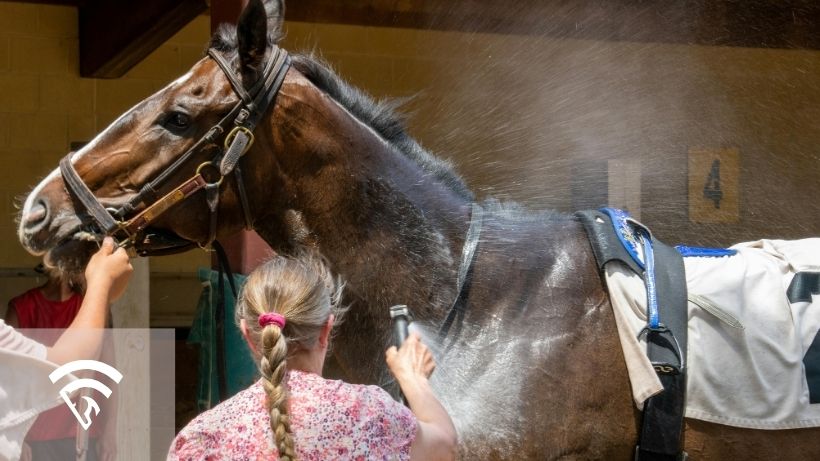
After training, the groom helps the horse return to a resting state. The groom may walk the horse, remove tack, sponge or rinse the horse, and check its breathing, legs, and overall condition.
A hot walker may handle part of this process. The groom still remains involved in the horse’s care and may continue monitoring it after the horse returns to the barn.
Watching for health and behavior changes
A groom watches the horse across the full day. This view can reveal details that a trainer may miss during a short training session.
The groom may report that a horse:
- Feels unusually quiet
- Resists picking up a hoof
- Leaves feed in its tub
- Sweats more than usual
- Becomes difficult to handle
- Shows stiffness after exercise
- Develops heat or swelling
The trainer can then decide whether the horse should train, rest, receive treatment, or see a veterinarian.
What happens on race day?
A groom follows a race-day routine that helps the horse reach the paddock in good condition.
Before the race
The groom checks the horse, grooms it, and prepares its equipment. The groom may braid the mane or tail when the stable uses that practice.
The groom then helps saddle the horse or leads it to the area where the trainer and jockey prepare it. The groom may also walk with the horse to the paddock or post parade.
The trainer gives instructions for the race. The jockey handles the horse during the race. The groom focuses on preparation, handling, and care before the start.
After the race
After the race, the groom meets the horse and helps remove its tack. The groom may walk the horse, rinse it, and check its legs and breathing.
The groom watches for signs of unusual fatigue, lameness, heat, cuts, or distress. The trainer uses this information when deciding how soon the horse should return to training.
The groom also returns the horse to its stall, provides water and feed according to instructions, and completes the normal post-race care routine.
What is the difference between a groom and a trainer?
A horse racing trainer oversees the horse’s full racing program. The trainer decides how the horse trains, which races suit it, and how the stable should prepare it for competition.
A groom handles the horse’s daily care. The groom follows the trainer’s instructions and reports changes in the horse’s health, behavior, and condition.
The two roles work closely together:
- The trainer creates the training and racing plan.
- The groom carries out daily care and preparation.
- The groom reports observations to the trainer.
- The trainer uses those observations when managing the horse.
A trainer may manage many horses and several members of staff. A groom usually works directly with a smaller group of assigned horses.
What is the difference between a groom and a hot walker?
A hot walker walks a horse after exercise to help it cool down and recover. The hot walker may also rinse the horse and return it to the barn.
A groom manages a broader set of daily responsibilities. Those responsibilities include stall care, feeding, grooming, health checks, race preparation, and post-exercise care.
Some stables use separate grooms and hot walkers. Other stables may ask grooms to handle some hot-walking duties. The division depends on the stable’s size, staffing, and work system.
How many horses does a groom care for?
A groom may care for several assigned horses. The number varies by stable, trainer, track, and the amount of care each horse needs.
A small stable may assign fewer horses to each groom. A larger operation may assign more horses, with hot walkers and other staff handling specific tasks.
The assignment can also change over time. A groom may care for more horses when a stable adds runners or fewer horses when the stable changes location or race schedule.
Can a groom affect horse betting decisions?
A groom does not set odds, choose wagers, or directly control a horse’s race strategy. However, the groom can affect betting information indirectly.
The groom’s daily observations may help the trainer understand how a horse feels and responds to work. Those observations can influence decisions about training, rest, equipment, race placement, or veterinary care.
Public bettors usually do not have access to a groom’s private observations. They may still see related signs in the paddock or post parade, such as a horse that appears calm, alert, overly sweaty, or uncomfortable.
These visual signs should not replace a full handicapping process. Bettors can combine paddock observations with past performances, pace data, trainer and jockey statistics, track conditions, and other race information.
What is a horse groom salary?
A horse groom’s salary depends on location, experience, stable size, work schedule, housing, and the type of racing operation. Some jobs pay hourly wages, while others use weekly or monthly arrangements.
A racing groom may also receive benefits such as room and board, meals, bonuses, or other stable-specific support. These details vary widely.
Anyone researching a horse groom job should check current local listings and ask about the full compensation package. A salary figure without a location and date may not describe the job accurately.
How can someone become a horse groom?
Many people start by working in a stable, farm, training center, or racetrack barn. Hands-on experience helps new workers learn safe horse handling, grooming, feeding, stall care, and basic horse health checks.
A horse groom apprenticeship can provide a more structured path. An apprentice may work under an experienced groom while learning stable routines and racehorse care.
Useful skills include:
- Safe horse handling
- Basic grooming
- Stall cleaning
- Feeding and watering
- Hoof care awareness
- Clear communication
- Physical stamina
- Careful observation
- Reliable time management
Experience with horses matters because the job requires early mornings, physical work, and close attention to routine.
What does “Kentucky Derby groom” mean?
A Kentucky Derby groom is the groom assigned to care for a horse entered in the Kentucky Derby. The title does not describe a separate type of groom.
That groom performs the same core duties as other racing grooms. The groom prepares the horse, manages its daily care, and supports the trainer during the race meeting.
The Kentucky Derby can bring more public attention to the groom because media coverage often highlights the people who care for the horses behind the scenes.
FAQ
What is a groom in horses?
A groom in horses is a person who provides regular hands-on care. In horse racing, a groom usually cares for assigned racehorses and handles feeding, grooming, stall cleaning, preparation, and health observation.
Is a groom the same as a horse groomer?
Yes. “Horse groomer” describes a person who grooms and cares for horses. “Racing groom” describes a groom who works with racehorses in a racing stable.
Does a groom ride the racehorse?
A groom may lead, walk, or handle a racehorse, but the groom does not usually ride the horse in a race. An exercise rider or jockey handles riding duties.
Do grooms train racehorses?
Grooms support training through daily care and preparation. The trainer creates the training plan and directs the horse’s workouts.
Do racehorses have one groom?
A stable may assign one groom to a horse or a group of horses. The exact arrangement depends on the stable and its staffing.
What is a groom job like?
A groom job involves early starts, physical work, detailed routines, and close contact with horses. The work includes feeding, grooming, cleaning stalls, preparing horses, and reporting health changes.
The role of a racing groom
A racing groom gives a horse the daily care it needs between workouts and races. The groom’s routine supports the horse’s health, comfort, and readiness.
The trainer guides the racing plan, the jockey rides in competition, and the hot walker helps with recovery after exercise. The groom connects these parts through consistent care and close observation.
For bettors, understanding the groom’s role adds useful context. Race results depend on many factors, but every racehorse reaches the starting gate after a team has cared for it behind the scenes.