Key points
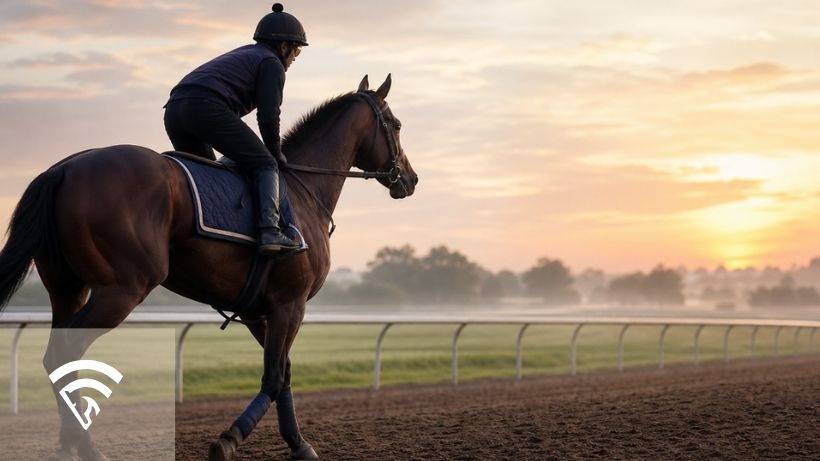
- An exercise rider rides racehorses during training and morning workouts.
- The rider may jog, gallop, breeze, or school a horse under a trainer’s plan.
- Exercise riders report changes in a horse’s attitude, movement, energy, and apparent soundness.
- A race-day jockey competes in races, while an exercise rider focuses on training and preparation.
- The job requires riding skill, horse sense, fitness, early-morning availability, and attention to safety.
- Exercise riders can help bettors understand workout reports, but their observations do not replace past performance data.
Exercise rider definition
An exercise rider is a person who rides racehorses during training. The rider usually works in the morning, before racing begins, and follows instructions from the horse’s trainer.
An exercise rider may take a horse to the track for a jog, gallop, timed breeze, or schooling session. The rider helps the horse build fitness, practice race-related skills, and prepare for competition.
The rider also watches how the horse behaves and moves. After the workout, the rider may tell the trainer whether the horse felt willing, tired, uncomfortable, distracted, or difficult to control.
Short answer: An exercise rider rides and evaluates racehorses during training. The rider helps the trainer prepare each horse for racing and reports useful observations after morning workouts.
What does an exercise rider do in horse racing?
An exercise rider carries out the trainer’s daily plan for each horse. That plan can change based on the horse’s age, fitness, health, race schedule, and past workouts.
A typical exercise rider may:
- Catch or mount a horse in the stable area.
- Ride the horse to the track or training surface.
- Jog or gallop the horse for conditioning.
- Breeze the horse at a planned speed and distance.
- School the horse near the starting gate.
- Help a horse learn to stand, break, turn, or settle.
- Watch the horse’s attitude and movement.
- Report concerns to the trainer.
- Ride several horses during one morning.
- Follow track rules and stable safety procedures.
Exercise riders often work with the same horses over several days or weeks. That repeated contact helps the rider notice small changes. A horse that usually settles quietly may become tense. A horse that normally changes leads smoothly may struggle during one workout.
The exercise rider does not diagnose an injury. The rider reports what they feel or observe, while the trainer and veterinarian decide what action to take.
Common racehorse workouts
Exercise riders use several types of training sessions. Racing professionals may use these terms differently from one track or stable to another, but the general meanings stay similar.
Jogging
Jogging is a slow, controlled movement used to warm up a horse or provide light exercise. The horse moves at a relaxed pace.
A trainer may ask a horse to jog before a faster workout. Jogging can also form part of a recovery day when the horse does not need a hard effort.
The exercise rider watches for stiffness, resistance, or an unusual way of going. A short jog can give the rider an early sense of how the horse feels that morning.
Galloping
Galloping is faster than jogging and usually covers more ground. A horse may gallop for a longer distance to build strength and stamina.
Galloping often forms the core of a racehorse’s daily conditioning. The horse works at a steady pace rather than producing a short, near-maximum effort. Some training programs use a mile or more of galloping to build fitness. 12
An exercise rider may report whether the horse felt relaxed, eager, tired, or hard to rate. The rider may also notice whether the horse changed leads correctly or maintained a steady rhythm.
Breezing
A breeze is a faster, timed workout. The horse usually travels a short distance at a strong pace, but the effort remains controlled.
Track officials record the distance and time of official workouts. These records can appear in past performance materials and workout databases. Equibase describes workouts as official timed exercises that show the distance and how the horse performed the work. 8
A breeze may test a horse’s speed, fitness, focus, or readiness for an upcoming race. The trainer may ask the exercise rider to let the horse work alone or alongside another horse.
Breeze times can help bettors compare horses, but time alone does not tell the full story. Track condition, weather, distance, rider instructions, and the horse’s position during the work can affect the result.
Schooling
Schooling teaches a horse how to handle parts of race-day preparation. An exercise rider may school a horse at the starting gate, in the paddock, or near other horses.
Gate schooling can help a horse learn to stand calmly, break cleanly, and respond to the starter’s signal. Paddock schooling can help a nervous horse adjust to the noise and activity before a race.
A horse that behaves well during a morning workout may still react differently in a crowded race. Schooling gives the trainer and rider more information before race day.
What does an exercise rider report to the trainer?
The rider sits on the horse and feels details that may not appear in a workout time. After the session, the rider may report on several areas.
Attitude
The rider may describe whether the horse felt calm, eager, distracted, aggressive, or reluctant. A change in attitude can give the trainer a reason to watch the horse more closely.
Energy
The rider may explain how much energy the horse showed during the session. The horse may leave the stable full of energy but fade during a gallop. Another horse may start quietly and improve as the session continues.
Movement
The rider may feel whether the horse moves evenly and maintains a consistent stride. The rider may also notice trouble changing leads, reluctance to turn, or a change in balance.
Breathing and recovery
The rider may notice how hard the horse seemed to work and how it recovered after the session. The trainer can combine that report with the horse’s breathing, pulse, and overall condition.
Apparent soundness
The rider may feel stiffness, uneven movement, or resistance that differs from the horse’s normal pattern. The rider should report the concern promptly. A trainer or veterinarian must decide whether the horse needs rest, treatment, or further evaluation.
These reports provide useful stable information. They do not guarantee that a horse will run well. A rider’s observation can support a larger review that includes official workouts, past performances, class level, pace, surface, distance, and competition.
Exercise rider versus jockey
An exercise rider and a jockey can perform similar tasks, but their primary jobs differ.
An exercise rider trains horses during morning sessions. A jockey rides horses in races and follows the race strategy set by the trainer and connections.
Some jockeys also exercise horses. A trainer may use a jockey for a morning workout when the jockey has a strong relationship with the horse or may ride the horse in an upcoming race.
The person who exercises a horse does not always become the horse’s race-day jockey. The trainer and owner may choose a jockey based on experience, race conditions, riding style, weight, availability, and past results.
Role comparison checklist
Exercise rider
- Rides during morning training.
- May ride several horses in one session.
- Follows the trainer’s workout instructions.
- Reports how the horse feels and behaves.
- Helps prepare horses for races.
- Usually does not compete in the race.
Race-day jockey
- Rides in official races.
- Manages the horse during competition.
- Uses pace, position, and timing to pursue the best result.
- Communicates with the trainer before and after the race.
- May also exercise horses during morning training.
Trainer
- Plans the horse’s training program.
- Chooses workouts and race entries.
- Reviews reports from riders and stable staff.
- Oversees the horse’s health and preparation.
- Works with the owner, veterinarian, jockey, and other staff.
Hot walker
- Walks horses after exercise or racing.
- Helps horses cool down and recover.
- Watches for changes in behavior or condition.
- Usually works from the ground rather than riding.
What is a typical exercise rider schedule?
Exercise riders usually start work early in the morning. Training often begins before sunrise so horses can use the track before racing or other stable activity begins.
A rider may exercise several horses in separate sessions. Each horse may need a different pace, distance, or level of effort. The rider must remember each trainer’s instructions and stay alert while moving among other horses.
The work can continue after the riding ends. Exercise riders may help with tack, report observations, or assist with basic stable tasks. The exact schedule depends on the track, trainer, season, and number of horses in the stable.
The job also requires physical effort. Riders spend long periods in the saddle and may work outdoors in cold, heat, wind, rain, or dust. They must control strong animals while staying relaxed enough to feel changes in movement and behavior.
What skills does an exercise rider need?
A strong exercise rider needs more than the ability to stay on a horse. The rider must understand how horses behave and how different horses respond to training.
Useful skills include:
- Confident riding at different speeds.
- Knowledge of horse behavior.
- Balance and control in the saddle.
- Physical fitness.
- Patience and calm judgment.
- Attention to instructions.
- Clear communication with trainers.
- Awareness of track traffic.
- Ability to notice changes in movement or attitude.
- Willingness to work early and outdoors.
Experience often begins with hands-on stable work. A new worker may start as a groom or hot walker before taking on riding duties. Direct experience helps a rider learn grooming, tack, horse care, stable routines, and basic safety.
Does an exercise rider need a license?
Licensing rules vary by racing jurisdiction, track, and job duties. An exercise rider may need an occupational license or another track credential before riding on a licensed racing surface.
The Kentucky Horse Racing Commission, for example, lists licensing as part of the career path described for exercise riders in a Kentucky racing education resource. That source also lists moderate-term on-the-job training and prior work experience. 2
A person interested in the job should contact the racing commission or track where they plan to work. The applicant may need to meet age, identification, safety, medical, insurance, or experience requirements.
No single licensing rule applies to every track. Riders should confirm the current requirements in their local jurisdiction.
How much does an exercise rider make?
Exercise rider pay varies by location, trainer, experience, stable size, and payment structure. Some riders receive a weekly wage. Others receive payment for each horse they exercise, or a combination of wages and per-horse fees.
A Kentucky horse-careers resource lists average exercise rider earnings of $500 to $700 or more per week, or $10 to $15 per horse. Those figures describe a specific industry and location, so they should not serve as a universal salary range. 2
Job seekers should ask whether an advertised rate includes benefits, workers’ compensation, housing, transportation, or payment for stable duties. They should also ask how many horses they can expect to ride each morning.
Salary websites may show limited or inconsistent data for this job because tracks use different titles and payment systems. A local track, trainer, racing association, or equine employment service may provide more useful information for a specific area.
Why exercise riders matter to handicappers
Exercise riders work close to the horse before the horse appears in the starting gate. Their observations can add context to a horse’s official workout record.
For example, a bettor may see that a horse posted a fast breeze. The exercise rider may have felt that the horse struggled to change leads or became tired near the end. Another horse may post an average time but finish the work with energy and a smooth stride.
These details can help explain a workout, but bettors should treat them as supporting information. A private observation does not replace a horse’s past performance record or the full race profile.
When studying a horse, compare the rider’s observations with:
- Recent workout dates.
- Workout distance and time.
- Track and surface conditions.
- Race distance.
- Class level.
- Pace style.
- Recent form.
- Jockey and trainer statistics.
- The horse’s record at the track or distance.
EquinEdge users can place these details beside broader handicapping signals, including EE Win Percentage, Pace Metric, Genetic Strength Rating, Strength of Race, past performances, and jockey and trainer statistics. The exercise rider’s role helps explain the training information behind some of those race-day questions.
Frequently asked questions
What is an exercise rider in horse racing?
An exercise rider rides racehorses during morning training. The rider may jog, gallop, breeze, or school horses and then report observations to the trainer.
What does an exercise rider do every day?
An exercise rider mounts and trains horses under a trainer’s instructions. The rider may exercise several horses, monitor their behavior and movement, and report concerns after each session.
Is an exercise rider the same as a jockey?
No. A jockey’s main job is to ride in official races. An exercise rider’s main job is to ride horses during training. One person can perform both jobs.
Can an exercise rider choose how fast a horse works?
Usually, the trainer sets the workout plan. The trainer may tell the rider the distance, pace, and purpose of the session. The rider follows those instructions and reports how the horse responds.
Can an exercise rider tell if a horse is injured?
An exercise rider may notice unusual movement, stiffness, or resistance. The rider should report the concern, but a trainer or veterinarian must evaluate the horse and diagnose any injury.
Do exercise riders need racing experience?
Most exercise riders need practical horse and riding experience. Some begin as grooms or hot walkers and learn through stable work. The exact experience and licensing requirements vary by track.
How do I find exercise rider jobs?
Look for openings through racetracks, trainers, equine employment groups, racing associations, and horse-career programs. Ask about riding experience, work hours, pay, housing, safety training, and licensing before accepting a position.
Do exercise riders influence betting results?
An exercise rider does not directly determine a race result. Their observations may give a trainer useful information and may help explain a horse’s preparation. Bettors should combine that information with official workouts, past performances, pace, class, and other race data.
Understanding the exercise rider’s role can make workout reports and race preparation easier to read. For a broader view, use EquinEdge to study past performances, pace, horse metrics, and trainer and jockey statistics before building a race opinion.