Key points
- "On his toes" describes a horse that is alert, springy on its feet, and mentally engaged without crossing into nervousness or agitation.
- The spleen releases stored red blood cells when a horse activates during warm-up, boosting oxygen capacity by up to 30% and directly improving race performance.
- Bettors can distinguish positive alertness from harmful over-arousal by watching for specific visual cues: ear position, eye expression, sweat patterns, and how the horse moves alongside the pony.
- Paddock observation works best when paired with data-driven metrics like win probability and pace projections, giving you a fuller picture than either approach alone.
- Real-world examples from the Kentucky Derby and Breeders' Cup show how "on his toes" has been used by trainers and journalists as a meaningful performance signal for decades.
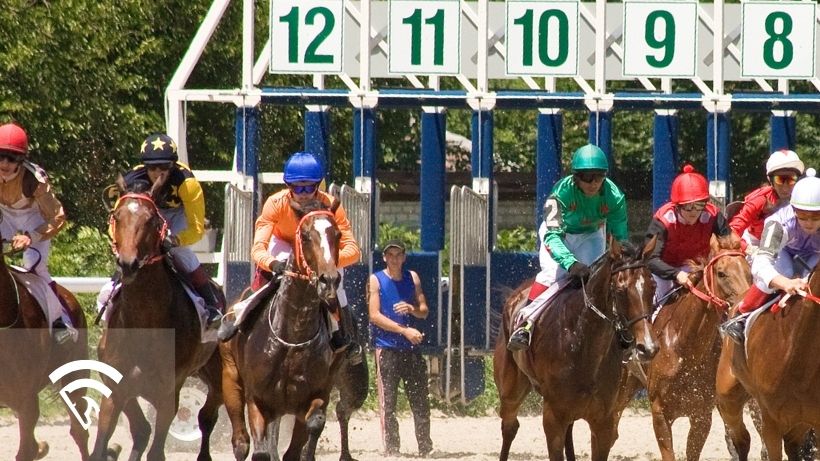
Every horseplayer has heard it. A trainer leans into a TV interview before a stakes race and says, "He's really on his toes today." The camera cuts to a colt bouncing alongside the pony, ears forward, neck arched. Some bettors nod and mark their program. Others shrug it off as paddock theater.
The phrase matters because it sits at the intersection of horsemanship and handicapping. A horse that is genuinely on its toes is not just putting on a show. Something physiological is happening, and understanding it can sharpen the way you read a race.
What "On His Toes" Actually Means
In horse racing, "on his toes" describes a horse that is physically alert, light on its feet, and mentally engaged with its surroundings. The horse carries itself with a spring in its step. Its ears point forward, tracking movement. Its eyes are bright and focused. It moves with energy that looks controlled rather than frantic.
The term is not a veterinary classification. It is a paddock observation, passed between trainers, grooms, and sharp-eyed handicappers who have learned to read equine body language as part of their pre-race routine. When someone says a horse is on its toes, they are describing a state of readiness: the animal knows something is about to happen and is preparing for it.
This is different from a horse that is simply fresh. A fresh horse has excess energy from days off or light training. It might buck, pull, or refuse to settle. A horse on its toes channels that energy into focus. The distinction matters because one state helps performance and the other hurts it.
The Physiology Behind the Behavior
The most important thing to understand about "on his toes" is the equine spleen. Horses store roughly one-third of their total red blood cells in the spleen during rest. When a horse anticipates exertion, the spleen contracts and releases those cells into circulation. The result is an immediate increase in oxygen-carrying capacity, sometimes by as much as 30%.
This is not a marginal effect. More red blood cells mean more oxygen delivered to working muscles. For a Thoroughbred running six furlongs to a mile and a quarter, that extra oxygen can be the difference between fading in the stretch and finishing with something left.
The spleen contraction is triggered by adrenaline, which is the same hormone that produces the visible signs of being on the toes. The prancing, the alert ears, the elevated head carriage: these are external signals of an internal process that directly affects race performance. A horse that warms up briskly, canters back to the pony with purpose, and arrives at the gate with a sheen of sweat but not lather has likely activated that spleen response in a productive way.
This is why experienced horsemen pay close attention to the warm-up. A short, energetic canter is not wasted energy. It primes the oxygen system. A horse that walks flat-footed to the gate with no visible engagement may be calm, but it may also be leaving that 30% oxygen boost on the table.
Positive Alertness vs. Harmful Over-Arousal
Not every horse that looks "up" in the paddock is in a good place. The line between beneficial alertness and performance-sapping nervousness is thin, and bettors who cannot read it are gambling on half the picture.
A horse that is positively on its toes shows these signs:
- Ears forward or swiveling, tracking sounds and movement with curiosity rather than fixation
- Eyes bright and engaged, not wide with white showing around the edges
- Movement that is springy and rhythmic, not jerky or pulling hard against the handler
- A light sweat on the neck and shoulders that appears during the warm-up, not before it
- Willingness to walk forward alongside the pony without fighting
A horse that has tipped into over-arousal looks different:
- Ears pinned flat or flicking rapidly in distress
- White lather between the hind legs, indicating stress sweating rather than exertion sweating
- Frantic eye movements, head tossing, or refusal to settle into a walk
- Sweating heavily before the warm-up even begins, especially in cool weather
- Pulling, rearing, or requiring multiple handlers to reach the gate
The distinction often comes down to whether the horse is responding to the environment or reacting against it. A horse on its toes is saying, "I'm ready." An over-aroused horse is saying, "I can't handle this." One conserves energy for the race. The other burns it before the gates open.
A Paddock Observation Checklist for Bettors
If you want to incorporate "on his toes" into your handicapping, you need a repeatable process. Here is a practical checklist you can run through during the post parade:
- Ears. Are they forward and mobile, or pinned and rigid? Forward ears signal engagement. Pinned ears signal irritation or stress.
- Eyes. Look for brightness and focus. A horse pricking its ears and scanning the track with soft eyes is in a good mental state. Wide eyes with visible white suggest fear.
- Movement. Is the horse stepping lightly with rhythm, or jerking and pulling? A springy walk that looks almost dance-like is a positive sign. Fighting the pony is not.
- Sweat. Where and when does it appear? Light sweat on the neck after the warm-up is normal. Heavy sweat before the canter, or white lather between the hind legs, is a red flag.
- The warm-up itself. Does the horse canter back to the pony with energy and purpose? A short, brisk warm-up that ends with the horse settled and alert is the ideal.
- Handler interaction. Is the groom or exercise rider relaxed, or are they straining to control the horse? The handler's body language often tells you more than the horse's.
Run this checklist consistently across every race you handicap. The goal is not to find one perfect sign. It is to build a pattern of observations that either confirms or contradicts what your data is telling you.
How "On His Toes" Has Shown Up in Racing History
The phrase has been part of racetrack vocabulary for decades, and some of its most memorable appearances came on the sport's biggest stages.
Before the 2015 Kentucky Derby, American Pharoah's connections described him as unusually calm in the paddock, but several observers noted that he was "on his toes" during the post parade, ears forward and stride purposeful. He won by a length and went on to capture the Triple Crown. The paddock report was not the reason he won, but it matched the outcome.
At the 2000 Breeders' Cup Classic, Tiznow was described by track commentators as "dancing on his toes" during the warm-up. He dug in through a stretch-long duel with Giant's Causeway and won by a nose. The visual of a horse physically elevated and engaged before a career-defining performance has become part of that race's lore.
These examples do not prove causation. Plenty of horses have looked spectacular in the paddock and run poorly. But they illustrate why the term persists: when a horse is genuinely on its toes, it looks like a horse that is about to run its race.
Blending Paddock Observation with Data-Driven Handicapping
Paddock observation alone is not a betting system. It is one input among many, and it works best when paired with quantitative metrics that give you a baseline expectation for each horse.
This is where modern handicapping tools change the equation. If your data tells you a horse projects as a mid-pack contender based on speed figures and pace, but you see it bouncing on its toes with bright eyes and a strong warm-up, you have grounds to upgrade it. If your data says a horse is the class of the field but it comes out washed out, lathered, and fighting the pony, you have grounds to downgrade it or pass the race entirely.
EquinEdge metrics like the EE Win Percentage and Pace Metric give you that baseline. The key factors in handicapping include speed, form, class, and pace, and each one benefits from a paddock sanity check. A horse with a strong turn of foot in its past performances becomes more interesting when you see it physically engaged and ready to fire. A horse with middling numbers that looks flat and disinterested in the post parade becomes an easy toss.
How to use trip notes from previous races can also inform your paddock read. If a horse had a troubled trip last out but looks sharp and focused today, the combination of a clean trip projection and positive body language is worth weighing.
The discipline is this: let the data set your baseline, let your eyes adjust it, and never let either one override the other completely. A horse that looks like a million dollars but has no numbers to back it up is still a bet against the field. A horse with the best figures in the race that is visibly distressed in the paddock is a bet you should think twice about.
What "On His Toes" Is Not
The term gets misused often enough that it is worth clarifying what it does not mean.
It is not the same as "fresh." A fresh horse is full of pent-up energy from light training or time off. Freshness often looks unfocused: bucking, playing, refusing to settle. A horse on its toes is focused.
It is not the same as "washy." A washy horse is sweating profusely, often before any exertion, and the sweat is typically accompanied by nervous behavior. Some horses wash out routinely and still run well, but washing out is a stress response, not a readiness signal.
It is not a guarantee. A horse can look perfect in the paddock and run last. Track conditions, pace dynamics, traffic, and simple bad luck still determine outcomes. Paddock observation improves your process. It does not replace it.
Frequently Asked Questions
Can a horse be too "on his toes"?
Yes. When alertness crosses into agitation, the horse is burning energy it needs for the race. The key distinction is whether the horse is responding to its environment with curiosity or reacting against it with fear. Ears pinned flat, white lather, and frantic movement signal that the line has been crossed.
Do all good performances start with a horse on its toes?
No. Some horses are naturally calm and run their best races when they appear almost sleepy in the paddock. Zenyatta was famous for walking to the gate like she was heading to a nap, then unleashing a devastating late run. Knowing the individual horse matters more than any universal rule.
How do track conditions affect the observation?
Muddy or sloppy tracks can change behavior. Some horses become more engaged on off tracks, while others resent the footing. Mud calks on a horseshoe can improve traction and confidence, which may affect how a horse carries itself. Factor in the surface when you interpret what you see.
Should I bet a horse just because it looks good in the paddock?
No. Paddock observation is a tiebreaker and a confidence adjuster, not a standalone selection method. Use it to confirm or question what your handicapping data already tells you.
What if I am watching on a simulcast and cannot see the paddock clearly?
Many tracks now include paddock and post parade coverage in their simulcast feeds. If the camera work is poor or the feed cuts away, you are working with incomplete information. Do not guess. Stick to the data you have.
Reading a horse in the paddock is a skill that sharpens with practice. The more races you watch with intention, the better you get at spotting the difference between a horse that is ready and a horse that is unraveling. Pair that skill with data-driven metrics, and you are making decisions from a fuller deck than most of the people sitting around you.