Key points
- Walking short means a horse takes shorter, choppier strides than normal while walking.
- The sign often points to soreness, stiffness, or low-grade lameness rather than a dramatic limp.
- A short walk can affect one leg or several, and the pattern helps narrow the cause.
- Bettors usually spot the phrase in race comments, vet reports, or paddock observations.
- Some horses naturally walk short, so compare today's movement to the horse's normal walk.
- Use the observation with past performances and EquinEdge metrics before changing a wager.
What Does Walking Short Mean?
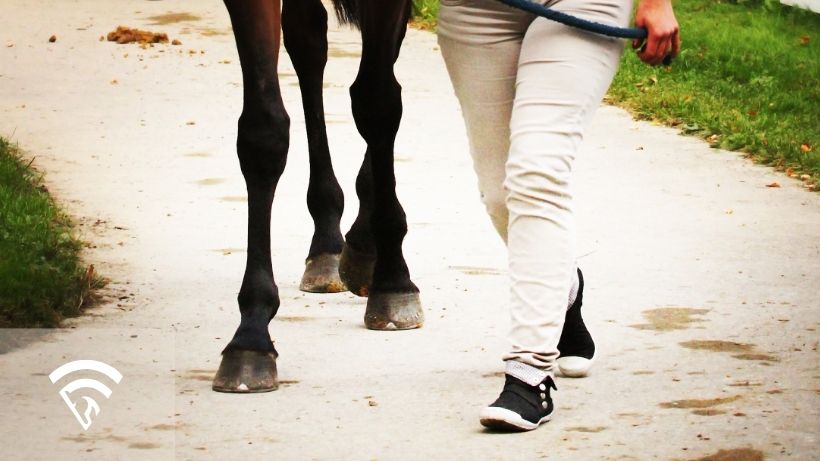
Walking short means a horse takes shorter, choppier strides than normal when it walks. Instead of reaching out with a relaxed, full stride, the horse shortens the arc of the leg and lands sooner than expected. The movement often looks stiff, quick, and restricted. It can show up in a front leg, a hind leg, or more than one leg at a time.
This is not always a limp. A horse that is walking short may still put weight on the leg and move forward. The change in stride length is the signal. Handicappers and horseplayers use that signal as an early warning because it often appears before a horse becomes visibly lame.
What Walking Short Looks Like
You can see a short walk best when the horse walks away from you and then back toward you. Watch the hind feet. A normal mover tracks up well, meaning each hind foot lands near or ahead of the front hoof print. A short-striding horse often lands behind that mark. The steps look clipped, and the horse may hold its back stiffly or swing one hip less than the other.
A front-leg issue can show up as a slight head bob. The horse may lift its head when the sore front leg lands. A hind-leg issue often shows as a hip drop on the opposite side. Watch both sides before you judge the horse. A horse can look smooth from one angle and clearly short from another.
Common Causes
Several issues can make a horse walk short before a race. These are the ones handicappers run into most often.
- Muscle soreness from a recent race, workout, or long ship.
- Stiffness from training, cool weather, or time spent standing in a stall.
- Low-grade lameness in a hoof, fetlock, knee, or hock.
- Back or hindquarter soreness that shortens the hind stride.
- Conformation that naturally produces a shorter walk.
Context matters. A horse coming off a hard workout may walk short for a few minutes and then stretch out as it warms up. A horse that is still walking short after the post parade and into the warm-up is a bigger concern. Some horses also walk short by nature, so a one-day observation is less useful than a comparison to that horse's usual movement.
Where Bettors See the Term
The phrase shows up in a few common places. Race comments and chart notes sometimes say a horse "walked short," "moved short behind," or "was short in front." Veterinarian or stewards reports can use the same language when a horse receives a pre-race exam. You may also hear it from a paddock observer, a trainer interview, or an on-track analyst describing the post parade.
Pre-race notes can help, but they are only one snapshot. A horse that walks short but then gets a clean trip may still have a fair chance. The key is to match the physical observation with the race shape and the horse's recent form.
How to Watch for It in the Paddock
You do not need a veterinary background to spot a short walk. Paddock and post parade viewing gives you a useful window.
- Watch the horse walk on a straight line first, then on the turn.
- Compare the length of the front and hind steps.
- Look for a head bob, hip drop, or tail swish that repeats with each stride.
- Check whether the horse stretches out after a few minutes of walking.
- Compare the horse's behavior to others in the same post parade.
A horse that is on his toes may look sharp and forward, while a horse that is walking short may look flat and uncomfortable. The difference is feel. On his toes suggests energy. A short walk suggests restriction or pain.
What Walking Short Means for Handicapping
A short walk before a race should raise your attention. It does not automatically disqualify a horse. Some horses warm out of stiffness, and some trainers send runners to the post with known minor soreness that does not stop them from performing. The warning is strongest when you see a short walk paired with another negative sign, such as a dull coat, washiness, or a poor post parade.
Use the observation as a reason to dig deeper. Check the horse's distance suitability and recent race flow. A horse that struggled to handle the trip last time may come back sore. If the race comments describe a difficult trip, the short walk may connect to that effort.
This is where EquinEdge fits. EquinEdge's AI-powered handicapping tool analyzes past performance data on every horse in North America in real time. When you see a short-walking horse in the paddock, open that horse's profile and check the metrics. EE Win Percentage, Pace Metric, and Genetic Strength Rating help you see whether the horse has the underlying form to overcome a rough morning or sore warm-up. The paddock tells you what is happening right now. The data tells you what that warning has meant for similar runners in the past.
Quick FAQ
Does walking short mean a horse is lame?
Not always. It can be a sign of low-grade lameness, but it can also come from stiffness, muscle soreness, or normal movement for that horse. Repeated short strides on one side are more concerning than a few clipped steps after a jog.
Can a horse walk short and still win?
Yes. Some horses warm out of a short walk and run well. The risk is higher than a horse that walks freely, but a short walk alone should not be the only reason to toss a horse.
Should I check anything else if a horse walks short?
Check whether the horse stretches out after moving, whether the short stride is on one leg or several, and whether the horse's recent races or works were hard. Then compare the physical sign to past performance data.
A short walk is one piece of the pre-race picture. Glossaries help you read that picture correctly, and EquinEdge helps you connect it to the numbers that matter. When you are ready to build that process into your handicapping, start with an EquinEdge trial.