Key points
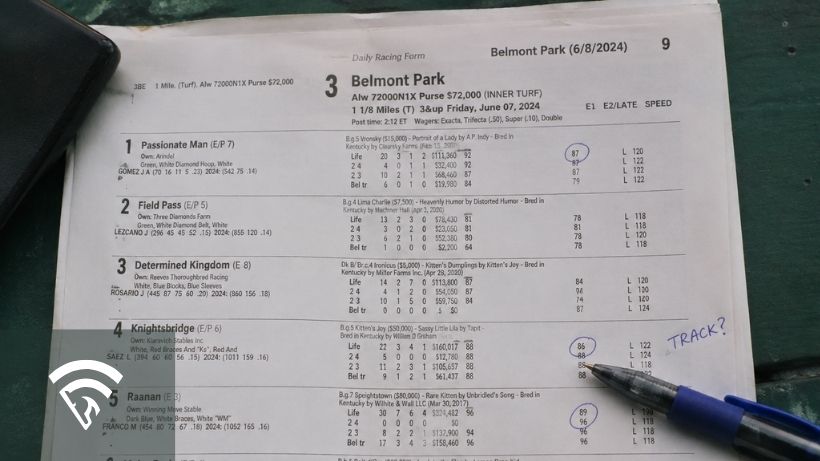
- A track variant adjustment is a numerical correction applied to a horse's raw race time to account for how fast or slow the racing surface was playing on a specific day.
- Daily track speed changes constantly due to weather, moisture content, maintenance work, and temperature.
- Speed figure makers calculate variants by comparing times across all races on a card against established benchmark times, called par times.
- Adding or subtracting a variant normalizes raw final times so bettors can accurately compare performances across different race dates and tracks.
- A fast surface yields a negative variant adjustment to lower raw speed ratings, while a heavy, slow surface produces a positive variant adjustment to boost them.
- Modern handicapping software processes surface speed variations automatically in real time using track data and historical race pars.
Definition of Track Variant Adjustment
A track variant adjustment is a mathematical credit or debit added to a horse's raw time rating when creating speed figures in horse racing. Racing surfaces are rarely uniform from one day to the next. A dirt track can play unusually fast on a dry, warm Friday afternoon, then play heavy and cuppy on Saturday morning after overnight rain.
If you look only at final clockings, a horse running six furlongs in 1:10.0 on a lightning-fast strip looks superior to a horse running six furlongs in 1:11.2 on a deep, sluggish track. In reality, the second horse may have produced a stronger physical effort against a harder surface. Track variant adjustment fixes this distortion. By measuring how much the racing surface sped up or slowed down overall race times across an entire card, figure makers calculate a numerical variant. Applying this variant converts raw times into normalized speed figures that let you compare horses across different days, tracks, and track conditions.
Why Track Surfaces Change Speed Daily
Dirt and turf surfaces react constantly to physical conditions. Even two days with identical weather designations like "Fast" or "Firm" can produce drastically different surface speeds.
Several daily factors alter how fast a track plays:
- Moisture levels: Water changes track density. A controlled amount of moisture tightens dirt, creating a hard, fast surface. Heavy rain creates a wet, mud-laden track that slows horses down unless the surface is sealed.
- Track maintenance: Maintenance crews use harrows to chew up the dirt surface and add depth, which slows down times. Watering between races also changes surface speed throughout an afternoon.
- Sealing the track: When rain threatens, track crews pack down the dirt with heavy rollers to seal out water. Packed surfaces play extremely fast.
- Temperature and humidity: Cold air and cold soil make dirt tracks stiffer and slower. Hot, dry weather dries out moisture, changing how horses catch their footing.
Because a driver or track superintendent can shift the surface depth between cards, handicappers cannot rely on raw final times alone. They need a numerical adjustment based on actual race results from that specific date and track.
How Track Variants Work: Par Times and Calculations
To figure out how fast or slow a surface played on a given day, handicappers and rating services rely on par times. A par time is the average expected final time for a specific class of horse running at a specific distance on a standard surface.
For example, a $25,000 claiming race at six furlongs might have a historical par time of 1:10.40 at a specific track.
Calculating a daily track variant involves four steps:
- Calculate raw time ratings: Convert each horse's final time into an initial numerical score based on a fixed time scale.
- Compare final times to class pars: Compare the actual winning times and fractional times in every race on the card against the established par times for those exact horse classes.
- Determine the daily difference: If the winning times across the card average two fifths of a second faster than par, the track was running fast. If the times average three fifths of a second slower than par, the track was running slow.
- Assign the variant value: Convert that time difference into points on the speed figure scale.
This process forms a central foundation when calculating Beyer Speed Figures and other major speed rating systems like Brisnet or Equibase.
When a track is fast, raw speed ratings are artificially high. Figure makers apply a negative variant adjustment to lower those ratings back to standard conditions. When a track is slow, raw speed ratings are artificially low. Figure makers apply a positive variant adjustment to raise those ratings to reflect the extra effort required on a dull surface.
Step-by-Step Example: Comparing Raw Times to Adjusted Figures
To see how track variant adjustment works in practice, compare two horses running at the same track and distance on different days.
Assume a speed figure scale where 1 point equals one-fifth of a second (0.20 seconds), and a base time of 1:11.00 equals a 90 raw rating.
Horse A (Run on Friday)
- Track state: Packed, dry dirt surface running fast.
- Distance: 6 Furlongs
- Final Time: 1:10.20
- Raw Rating: 94
- Daily Track Variant: -8 points (Surface was playing roughly 1.6 seconds faster than standard par).
- Final Adjusted Speed Figure: 94 - 8 = 86
Horse B (Run on Saturday)
- Track state: Deep, harrowed dirt surface running slow.
- Distance: 6 Furlongs
- Final Time: 1:11.40
- Raw Rating: 88
- Daily Track Variant: +8 points (Surface was playing roughly 1.6 seconds slower than standard par).
- Final Adjusted Speed Figure: 88 + 8 = 96
Looking only at raw clockings, Horse A appears faster by more than a full second. Once you apply the track variant adjustment, Horse B earned a 96 speed figure while Horse A earned an 86. Horse B ran the superior race against a much slower surface.
Track Variant vs Track Bias
Handicappers sometimes confuse track variant with track bias, but the two concepts measure different things.
A track variant measures overall surface speed. It tells you whether the entire track was fast or slow for every horse running on that date.
Track bias measures directional or positional advantages on the track. A track bias occurs when specific lanes (like the inside rail) or specific running styles (like front-runners) hold a distinct advantage over the rest of the field. Checking the overall daily track condition helps establish the variant, while observing race replays helps identify lane bias.
A track can have a slow variant overall while still favoring horses that stay near the inside rail. Understanding both factors gives handicappers a complete picture of past performances.
How Handicappers Use Variants in Race Analysis
Using track variant adjustments improves your race analysis in three main ways:
- Spotting hidden form: Horses returning from races run on slow, heavy surfaces often carry low raw times that hide their true capability. An adjusted speed figure reveals their actual form.
- Evaluating ship-ins: Comparing horses that ran at different tracks requires a standardized figure. Variants remove track-specific surface quirks from the equation.
- Identifying false favorites: A horse coming off a visually impressive win on a lightning-fast surface might be overbet. If its high raw speed rating came mostly from a heavy negative track variant, the horse may perform poorly on a standard surface.
When evaluating horses racing on dirt tracks, paying attention to variant swings between morning and afternoon cards prevents you from overrating horses that benefited from a changing track.
Automated Track Variant Calculations
Calculating precise track variants manually takes time, access to extensive historical par databases, and constant monitoring of daily race charts. Modern AI handicapping tools handle these complex calculations automatically.
Software algorithms analyze track conditions, historical par times, individual pace splits, and wind data in real time. The software applies the exact variant adjustment to every horse's past performances instantly. This automation gives handicappers objective, normalized speed figures without requiring manual chart work.
Frequently Asked Questions
What does a negative track variant mean in speed figures?
A negative track variant means the racing surface was playing faster than standard par times. The figure maker subtracts points from the raw time rating to prevent the horse's speed figure from being artificially inflated by a fast surface.
Can track variants change during a single racing day?
Yes. Rain showers, sun drying out a wet surface, or mid-card track harrowing can change surface speed in the middle of a race day. Advanced rating systems compute split variants for different portions of the race card when conditions shift significantly.
What is the difference between a raw time and an adjusted speed figure?
A raw time is the unadjusted clocking a horse recorded in its race. An adjusted speed figure takes that raw time and modifies it using track variants, distance adjustments, and beaten lengths to create a normalized rating you can compare across any race track.