Key points
- A turf route race takes place on a grass course at a route distance.
- Turf routes are typically longer than one mile.
- Horses need stamina, tactical speed, and a clean trip around turns.
- Turf form and dirt form do not always carry over from one surface to the other.
- Saving ground can matter more as horses negotiate multiple turns.
- Review prior turf-route races, pace, rider stats, and course conditions before betting.
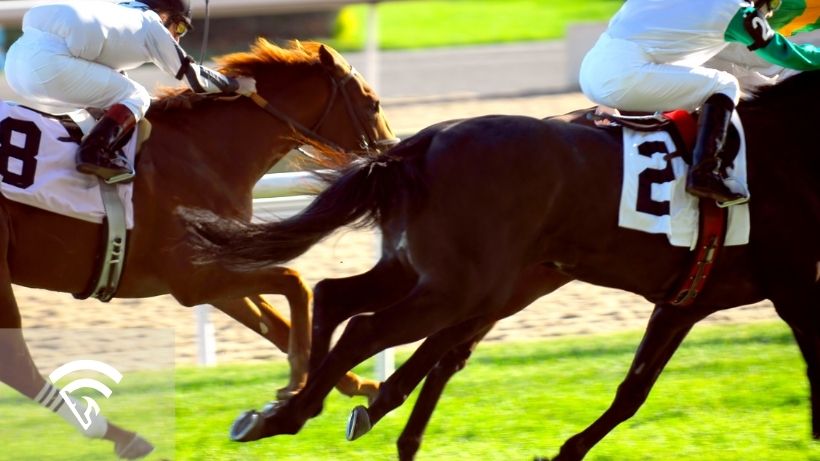
A turf route race is a horse race run on a grass surface at a route distance, typically longer than one mile. The term combines two details on the race card: the course surface is turf, and the distance asks horses to run farther than a sprint.
Turf route races test more than raw early speed. Horses need enough stamina to finish, the ability to settle into position, and a trip that does not waste ground around turns. For bettors, these races call for a close review of past turf form, route experience, pace, and course layout.
Breaking down the term: turf and route
A turf route race has two parts:
- Turf tells you the race takes place on grass.
- Route tells you the race covers a longer distance, generally over one mile.
A horse may run well on dirt and still struggle on turf. Grass courses often reward a different running style, stride, and level of comfort than dirt tracks. Start by learning how turf tracks affect racing, then review each horse’s record on that surface.
A route race also creates a different pace problem than a sprint. Horses must conserve enough energy for the stretch run. Early speed still matters, but a front-runner who goes too fast can weaken late.
For a deeper look at the distance side of the equation, see the EquinEdge guide to a route race in horse racing.
How to identify a turf route race on a race card
You can usually identify a turf route race in a few seconds.
First, check the listed surface. Race cards may use “turf,” “grass,” or an abbreviation that identifies the turf course. Some tracks also run races on multiple turf layouts, such as an inner course and an outer course.
Next, check the distance. Turf routes commonly include distances such as:
- 1 mile
- 1 1/16 miles
- 1 1/8 miles
- 1 3/16 miles
- 1 1/4 miles
- Longer distances, depending on the track and race conditions
Distance labels can vary by track. A one-mile race may be considered a route in many racing discussions, while other handicappers reserve the term for races beyond one mile. The useful betting question stays the same: Does this race demand stamina, positioning, and performance around turns?
Finally, confirm the race has not moved off the turf. Rain, course conditions, or safety concerns can cause a track to move a scheduled turf race to dirt or synthetic. That change can alter the entire handicapping picture.
Why turf route races matter to handicappers
Turf route races give handicappers several layers to study. The surface, distance, pace, and trip all shape the result.
A horse with fast dirt races does not automatically deserve favoritism on grass. Another horse may own slower overall speed figures but show stronger turf-route form. That horse may offer more value if the odds do not reflect its surface and distance fit.
Turf routes also often feature more tactical races than dirt sprints. Jockeys may try to settle their mounts behind the leaders, avoid losing ground, and time one sustained run into the stretch.
When you handicap a turf route race, focus on whether each horse has already shown it can handle the assignment.
What to review in a horse’s past performances
Past performances can show whether a horse fits today’s turf route. Start with the most relevant races rather than relying on the horse’s overall record.
Prior turf-route form
Look for prior races on turf at route distances. A horse that has run well at 1 1/16 miles on grass has more direct evidence than a horse whose best races came in dirt sprints.
Review:
- Finishing position
- Beaten lengths
- Class level
- Distance
- Course condition
- Running position at each call
- Final time and pace context
One poor turf-route finish does not always mean a horse cannot handle the setup. The horse may have faced a tougher field, encountered traffic, raced wide, or run on a course it disliked.
Turf form versus dirt form
Turf and dirt can produce very different results. Dirt races often favor early speed and direct acceleration. Turf races can place more weight on rhythm, positioning, and a late turn of foot.
Compare each horse’s records by surface:
- Turf starts, wins, and in-the-money finishes
- Dirt starts, wins, and in-the-money finishes
- Route results on each surface
- Recent races on similar course conditions
A dirt horse making its turf debut may still improve. Pedigree, trainer patterns, and running style can offer clues. Still, bettors should avoid assuming that dirt success will transfer to a turf route.
Distance ability
A horse that excels at six furlongs may not carry that speed through a mile and a sixteenth. Check whether the horse has run competitively at route distances.
Look for signs that a horse can finish:
- Late position gains
- Strong final fractions
- Competitive efforts at similar distances
- Prior success around two turns
- A running style that fits a longer race
A horse stretching out from a sprint can improve when it gets a softer early pace. Another horse may tire once the added distance exposes its stamina limit.
Trip and ground loss
A trip is the path a horse takes during a race. In turf routes, a horse can lose meaningful ground by racing wide around multiple turns.
A horse that saves ground near the rail travels a shorter path than a horse parked three or four wide. That does not mean the rail always offers the best trip. A horse can get trapped behind tiring rivals or face traffic at a key point.
Use trip analysis in horse racing to spot horses whose finish may not tell the full story. A horse that lost ground on both turns but still closed well may be stronger than its final placing suggests.
How pace shapes a turf route race
Pace affects every race, but turf routes can reward horses that use their energy efficiently.
A slow early pace may help horses near the lead. Those runners can save energy and sprint home before closers find clear running room. A fast pace can help horses that settle farther back and make one late run.
Start by identifying the likely early leaders. Then ask whether they have enough pressure to create a quick pace.
Consider:
- Which horses usually contest the lead
- Whether the field includes several need-the-lead runners
- Whether a lone speed horse may control the pace
- Which horses can sit just behind the leaders
- Which horses need a fast pace to close effectively
EquinEdge’s Pace Metric can help bettors compare how a race may set up. Pace should support your read of the field, not replace a review of the horses’ surface and distance records.
Course layout and turns
Turf courses do not all play the same way. Some layouts feature tight turns. Others have longer stretches that give closers more time to run. A course can also have an inner and outer configuration with different distances to the first turn.
The first turn matters in many turf routes. Horses drawn outside may need to use extra energy to secure position, or they may lose ground while racing wide. A jockey who saves ground without getting trapped often gains an edge.
Pay attention to:
- The number of turns
- The run from the starting gate to the first turn
- Post position
- Rail placement, when available
- Whether the course appears firm, yielding, or soft
- Recent results at the same track and distance
Course condition can change the race. Firm turf often supports faster times and a stronger finish. Softer turf can place a bigger demand on stamina and may favor horses with prior success over yielding ground.
A turf route race example
Imagine a 1 1/16-mile race on turf with ten horses.
Horse A has strong dirt sprint form but has never raced on turf. Horse B has two recent turf-route starts, including a close second after racing wide around both turns. Horse C has early speed and may be the only clear front-runner.
A bettor should not rank Horse A first on dirt speed alone. Horse B brings proven turf-route form and may have run better than its last finish indicates. Horse C could become dangerous if the pace looks soft and the jockey can control the race.
The best play depends on odds, class, pace, and the full field. This example shows why surface and distance context matter before a bettor compares raw finishing positions.
Common turf route race mistakes
Bettors can avoid several common errors when evaluating turf routes.
Treating all surface form the same
A horse’s overall record can hide important differences. Separate turf performances from dirt and synthetic performances.
Ignoring route experience
A horse may look fast at short distances but fail to finish a longer race. Give extra weight to proven stamina when the field runs a route.
Overlooking a bad trip
A horse that raced wide, got blocked, or made an early move may deserve another chance. Review the race flow instead of judging only by the finishing order.
Assuming every turf race favors closers
Closers can thrive in a fast-paced turf route. A slow pace can give front-runners and stalkers a major advantage.
Forgetting race-day conditions
A scheduled turf race can move to another surface. Firm, yielding, and soft turf can also lead to different results.
Related horse racing terms
A few related terms can help you read turf route races with more confidence:
- Turf race: Any race run on a grass course.
- Route race: A longer race, generally around one mile or farther.
- Sprint: A shorter race, usually less than one mile.
- Stalker: A horse that races close to the leaders without setting the pace.
- Closer: A horse that makes its strongest move late.
- Trip: The ground a horse covers and the racing path it receives.
- Post position: The gate position from which a horse starts.
- Pace: The speed and shape of the race at different points.
The EquinEdge horse racing glossary covers these terms and other race-card language that can shape a betting decision.
Frequently asked questions
What is a turf route race for horses?
A turf route race is a horse race run on a grass course at a longer distance, typically more than one mile. It tests a horse’s ability to handle turf, stamina, pace, and turns.
Is one mile a turf route race?
One mile is often treated as a route distance, especially when the race runs around turns. Definitions can vary by track and handicapper, so check the race layout and the demands it places on horses.
What is the difference between a turf race and a turf route race?
A turf race can be any distance on grass. A turf route race specifically takes place on grass at a longer route distance.
Are turf route races harder to handicap?
Turf routes add variables such as surface preference, ground loss, pace, and stamina. A clear process makes them easier to evaluate. Start with prior turf-route form, then study trip details and the likely pace.
Do dirt horses run well in turf route races?
Some do, but dirt success does not guarantee turf success. Review prior turf starts, pedigree, trainer patterns, and the horse’s running style before backing a dirt horse on grass.
Why does saving ground matter in a turf route?
A horse that races wide around turns covers more distance than a horse near the rail. In a race with multiple turns, that added ground can use energy that the horse needs for the finish.
Use the EquinEdge dashboard tutorials to review race data, pace, past performances, and jockey and trainer statistics before making your next turf-route wager.