Key points
- Pinned ears means the horse has flattened its ears tight back against its head or neck, not simply rotated them to listen.
- A brief pin can signal focus or a passing reaction; a sustained pin usually signals discomfort, irritation, or a warning.
- Context changes the meaning: saddling, the post parade, the starting gate, and the race itself all read differently.
- Read the whole body. A swishing tail, tense neck, bared teeth, or reluctance to move sharpens what the ears are telling you.
- Pinned ears alone are not a wagering signal. Treat them as one observational clue that sits alongside data-driven handicapping.
What pinned ears actually means
When a horse pins its ears, it flattens them back tight against its head or neck. This is different from a horse that simply rotates its ears backward to listen to a rider, a groom, or a sound behind it. A listening horse keeps its ears mobile and relaxed. A horse with pinned ears holds them flat and stiff, and the ears often stay there for longer than a passing moment.
The position itself is a form of communication. Horses use their ears the way people use facial expressions. Forward ears show interest and alertness. Ears that flick back and forth show the horse is tracking its surroundings. Ears pinned flat back usually mean the horse is annoyed, uncomfortable, threatened, or concentrating hard on something directly behind it.
Why a racehorse pins its ears
Racehorses pin their ears for several reasons, and the reason depends heavily on where you are watching and what else the horse is doing.
Discomfort or irritation. A horse may pin its ears when a saddle is tightened, when a girth pinches, or when a rider's weight lands awkwardly. This is a common sight in the saddling area and the paddock. A horse that pins its ears while being tacked up is often reacting to pressure or pain, not to a rival.
Warning to another horse. Horses pin their ears to say "back off." In the post parade or the starting gate, a horse may pin its ears at a neighbor that crowds too close. This is social signaling, and it can escalate to a bite or a kick if the other horse ignores it.
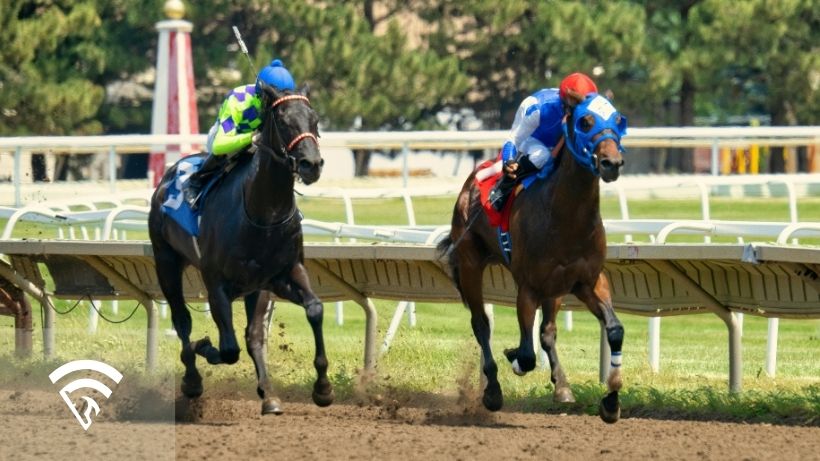
Focus and effort. During a race, a horse may pin its ears while digging in for the stretch run. This is not necessarily anger. It can be the same hard concentration you see in an athlete who narrows their eyes and drives forward. The difference is usually in the rest of the body: a focused horse stays forward and rhythmic, while an irritated horse gets stiff and resistant.
Fear or stress. A horse that feels trapped or overwhelmed may pin its ears and tense up. This shows up most often around the starting gate, where noise, crowding, and pressure combine.
How to read the difference: a quick field guide
Ear position only tells you part of the story. The most useful question to ask is whether the pin is brief or sustained, and what the rest of the horse is doing.
Brief pin that relaxes quickly. If the ears flatten for a second and then come forward again, the horse is likely reacting to a passing sound, a touch, or a moment of effort. This is normal and rarely means much on its own.
Sustained pin with a relaxed body. A horse can hold its ears back while staying loose and moving well. This often reads as focus rather than distress. Watch whether the stride stays smooth and the horse keeps responding to its rider.
Sustained pin with tension. If the ears stay pinned while the neck stiffens, the tail swishes hard, the teeth bare, or the horse refuses to move forward, the message is clearer. The horse is uncomfortable or warning someone. This is the combination to take seriously, especially before a race.
The paddock is the best place to practice this. A horse that walks calmly with its ears forward is in a different state than one that pins its ears, swishes its tail, and balks at the handler. For more on reading those paddock signals, our guide to what a dull horse looks like in the paddock walks through the opposite end of the energy spectrum.
Where you will see pinned ears at the track
In the paddock. You are watching for baseline temperament. A horse that pins its ears at its handler or at other horses before the race may be carrying tension into the gate. A horse that stands relaxed with forward ears is often in a calmer frame of mind.
In the post parade. This is where social signaling shows up most. Horses walk close together, and ear pins aimed at a neighbor are common. Watch whether the horse stays focused on the track or keeps turning its attention to the horses around it.
At the starting gate. The gate is the highest-stress moment for many horses. A horse that pins its ears, braces, or refuses to load is telling you it is uncomfortable. A horse that loads cleanly and stands with its ears forward or neutral is handling the pressure better.
During the race. Mid-race ear pins often mean effort. A horse digging in for the drive may flatten its ears while it works. This is where the rest of the body matters most: a strong, rhythmic stride with pinned ears reads differently than a shortened, choppy stride with pinned ears.
For the opposite signal, what "on his toes" means in horse racing explains the alert, high-energy body language that can indicate a horse is ready to run.
Pinned ears and other body language
Ears never work alone. The most reliable reads combine ear position with at least one other signal.
A horse that pins its ears and swishes its tail is usually irritated. A horse that pins its ears and bares its teeth is issuing a direct warning. A horse that pins its ears and pins its body, refusing to move, is often in pain or deeply stressed. Our glossary entry on tail swishing and head tossing in horse racing covers that pairing in more detail.
The contrast with forward, pricked ears is also useful. When a horse's ears snap forward, it is paying attention to something ahead. When they flatten back, the attention has shifted behind or inward. Understanding both directions helps you read a horse's focus in real time, which is the subject of our guide to what pricking the ears means for a racehorse.
What pinned ears are not
Pinned ears are not a prediction. A horse that pins its ears in the paddock can still win. A horse with relaxed, forward ears can still run poorly. Ear position is a snapshot of a horse's state in one moment, and it changes constantly.
This is where the observational layer meets the data layer. Watching body language helps you form a picture of how a horse is handling the day. It does not replace past performance, pace, class, or the metrics that actually drive a wager. If you want to combine what you see at the track with data-driven race analysis, EquinEdge's AI-powered horse racing handicapping software turns past performance data into win percentages, pace metrics, and ticket recommendations you can weigh against your own paddock notes.
Frequently asked questions
Does pinned ears always mean a horse is angry? No. Pinned ears can mean anger or a warning, but they can also mean discomfort, fear, or hard concentration. The rest of the body tells you which one you are seeing.
Should I avoid betting a horse that pins its ears in the paddock? Not on that signal alone. A brief pin or a pin during effort is common and says little about how the horse will run. Only treat a sustained pin with other tense body language as a red flag, and even then, weigh it against the horse's data.
What is the difference between pinned ears and ears turned back? Ears turned back are mobile and relaxed; the horse is listening behind it. Pinned ears are flattened tight against the head or neck and held stiff. The difference is in how flat and how still the ears are.
Do horses pin their ears during a race? Yes. Many horses pin their ears while working hard in the stretch. When the stride stays strong and rhythmic, this usually reads as effort rather than distress.